



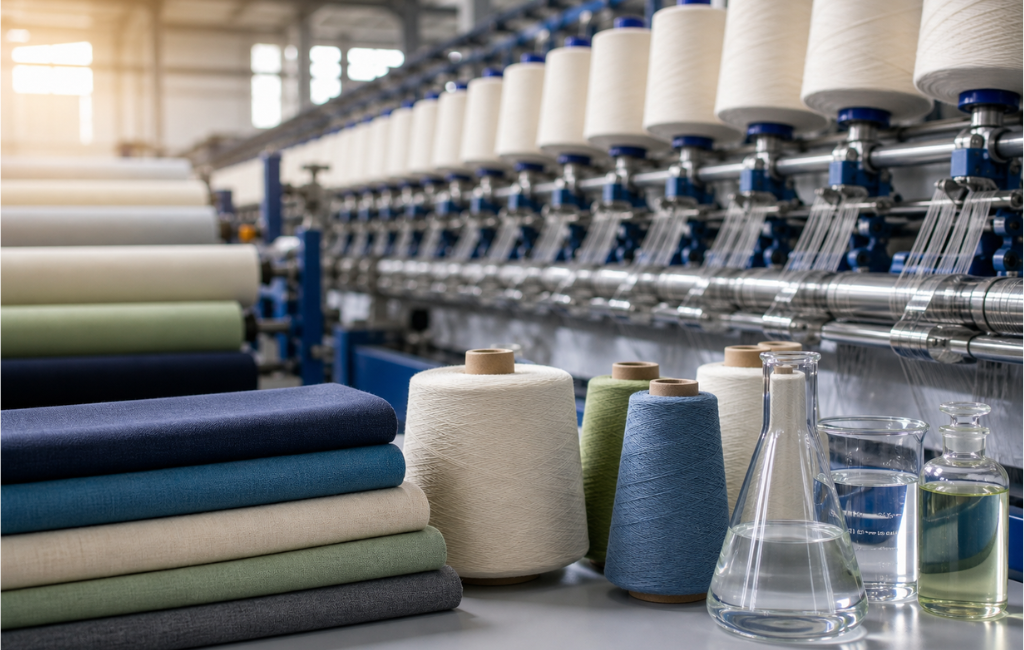
Choosing the right textile chemical supplier is an important decision for textile mills and manufacturers. The quality of chemicals used during manufacturing can influence yarn performance, fabric characteristics, process consistency, and overall production efficiency.
With multiple textile chemical suppliers in India, buyers need to look beyond price and evaluate product quality, technical support, documentation, sustainability, and supply reliability.
Whether you are looking for textile sizing chemicals, binders, or softeners, selecting a suitable supplier can help you make informed purchasing decisions and support your manufacturing requirements.
In this guide, we explore the key factors to consider before choosing a textile chemical supplier in India.
Why Choosing the Right Textile Chemical Supplier Matters
Textile manufacturing involves several processes, each with specific chemical requirements. Selecting an unsuitable chemical may contribute to processing difficulties, inconsistent results, rework, or unnecessary costs.
A reliable supplier should understand your application requirements and provide clear product information to help you select suitable solutions.
When evaluating textile chemical suppliers, consider:
- Product quality and consistency
- Application suitability
- Technical documentation
- Regulatory compliance
- Supply reliability
- Technical support
- Sustainability considerations
- Overall cost and value
A supplier that understands your manufacturing needs can help you make better-informed decisions about chemical selection.
1. Check Product Quality and Consistency
Product quality should be one of your first considerations when comparing textile chemical manufacturers in India.
For textile mills, consistent chemical characteristics are important for maintaining predictable manufacturing conditions. Differences between batches or unsuitable application conditions can affect process performance.
Before placing a bulk order, ask the supplier about:
- Product specifications and quality-control procedures
- Batch consistency
- Recommended application conditions
- Storage and handling requirements
- Technical Data Sheets (TDS)
- Safety Data Sheets (SDS)
Where appropriate, conduct a product trial under actual production conditions before moving to large-scale use.
This helps your technical team assess whether the product meets your process requirements.
2. Understand the Types of Textile Chemicals You Need
Not every textile chemical is suitable for every manufacturing application. Before contacting suppliers, identify the specific products required for your operations.
Textile Sizing Chemicals
Textile sizing chemicals are used in warp yarn preparation to help improve yarn performance during weaving.
When selecting sizing chemicals, consider yarn characteristics, loom conditions, production requirements, and the desired performance of the sizing system.
Textile Binders
Textile binders are used in applications that require suitable binding properties. Their selection depends on the material, intended application, and required product characteristics.
Ask suppliers for technical specifications and application guidance relevant to your manufacturing needs.
Textile Softeners
Textile softeners are used to help achieve desired fabric softness and handle.
The right product depends on fabric composition, finishing requirements, compatibility, and the intended end use.
Practical tip: Share your actual application requirements with the supplier instead of selecting a product based only on its name or price.
3. Evaluate Technical Support and Product Knowledge
A supplier should do more than provide a quotation. Technical guidance can help manufacturers understand product suitability and application requirements.
Before selecting a supplier, find out whether they can help with:
- Product selection
- Application-related questions
- Technical specifications
- Compatibility considerations
- Product trials, where available
- Troubleshooting guidance, where offered
A supplier who understands your process requirements can help you evaluate products more effectively.
Technical support is especially valuable when introducing a new chemical or reviewing an existing manufacturing process.
4. Verify Documentation and Regulatory Compliance
Documentation helps manufacturers understand how a chemical should be handled, stored, and used.
Depending on the product and application, relevant documents may include:
- Safety Data Sheets (SDS)
- Technical Data Sheets (TDS)
- Product specifications
- Applicable compliance declarations
- Certification-related documentation, where relevant
Textile manufacturers supplying international markets should also understand the chemical requirements that apply to their products and customers.
What About REACH-Compliant Textile Chemicals?
REACH is a European Union regulation concerning the Registration, Evaluation, Authorisation and Restriction of Chemicals.
For businesses selling into applicable European markets, REACH-related requirements may be relevant to the chemicals used in their supply chains.
When sourcing REACH-compliant textile chemicals, request product-specific documentation and verify that the information addresses the requirements relevant to your application.
Do not assume that every product from a supplier is automatically compliant simply because one product or the company has a compliance-related declaration.
5. Look for Sustainable Textile Chemical Solutions
Sustainability is an important consideration for many textile manufacturers, brands, and exporters.
However, a product described as eco-friendly should be evaluated using supporting information rather than marketing language alone.
When comparing sustainable textile chemicals, consider:
- Product composition and safety information
- Environmental characteristics supported by evidence
- Biodegradability information, where applicable
- Relevant certifications or declarations
- Chemical consumption during application
- Compatibility with existing processes
- Overall manufacturing impact
A suitable sustainable solution should align with your environmental objectives while meeting the technical requirements of your production process.
Manufacturers should verify sustainability claims and applicable certifications for each product rather than assuming they apply to an entire product range.
6. Evaluate Bulk Supply Capacity and Delivery Reliability
For textile mills purchasing chemicals in large quantities, dependable supply is an important part of supplier selection.
Before finalizing an order, discuss:
- Minimum order quantities
- Available packaging options
- Expected lead times
- Delivery schedules
- Repeat-order requirements
- Storage and handling conditions
- Communication during supply delays
These details can help procurement teams plan inventory and reduce the risk of unexpected supply interruptions.
Choose a supplier whose confirmed supply arrangements match your actual purchasing requirements.
7. Compare Pricing and Overall Value
Price matters, but the lowest quotation does not always represent the best value.
A chemical’s overall cost can depend on its dosage, performance, compatibility, handling requirements, and influence on production efficiency.
When comparing quotations, consider:
Total cost = Purchase price + application cost + logistics + potential rework and quality losses
Ask suppliers to clarify the product specifications, pack sizes, commercial terms, and delivery costs included in their quotations.
Comparing equivalent products under similar conditions can help you make a fair assessment.
8. Check Communication and Supplier Reliability
Good communication can make routine purchasing and technical coordination easier.
Evaluate whether a supplier responds clearly to enquiries, provides the requested documents, explains product specifications, and communicates realistic delivery expectations.
You can also ask for relevant customer references or examples of experience with similar applications, where available.
A transparent supplier relationship helps both parties understand expectations and address issues more effectively.
Questions to Ask Before Choosing Textile Chemical Suppliers in India
Before placing an order, ask potential suppliers these questions:
- Is the product suitable for my textile application?
Request technical information and discuss the conditions in which the chemical will be used. - Can you provide product documentation?
Ask for relevant SDS, TDS, specifications, and applicable compliance information. - Is the product available in the quantity I require?
Confirm minimum order quantities, packaging, lead times, and repeat-order arrangements. - What technical support is available?
Understand whether application guidance or product trials can be provided. - What evidence supports sustainability claims?
Request relevant product information, declarations, and certifications where applicable. - How should I compare your quotation with other suppliers?
Compare specifications, dosage, delivery terms, and expected application performance not just price.
These questions provide a practical starting point for evaluating suppliers.
Why Consider Sri Gomuki Tex Chem?
Sri Gomuki Tex Chem Pvt Ltd provides textile chemical solutions for modern textile manufacturing, with a focus on textile sizing chemicals, binders, and softeners.
When evaluating a chemical supplier, manufacturers should consider how the available products align with their application requirements, desired performance, documentation needs, and purchasing plans.
Conclusion
Choosing reliable textile chemical suppliers in India requires a structured approach. Product quality, technical support, documentation, regulatory requirements, sustainability, bulk supply arrangements, and overall value should all be part of the decision.
For textile mills and manufacturers, taking time to evaluate these factors can help reduce purchasing uncertainty and support more consistent production planning.
Rather than choosing a supplier based only on price, look for a suitable match between your manufacturing requirements and the supplier’s verified product information and capabilities.
Looking for textile chemical solutions for your manufacturing requirements?
Call Now: +91 9655006383
Email: sales@srigomuki.com
Sri Gomuki Tex Chem Pvt Ltd — Think Sustainability. Choose Gomuki.
Frequently Asked Questions
Evaluate product quality, consistency, technical support, documentation, supply reliability, sustainability information, and overall commercial value.
Common categories include textile sizing chemicals, binders, and softeners, along with other application-specific auxiliary chemicals.
Documentation helps manufacturers understand product specifications, safe handling, storage, application requirements, and relevant compliance information.
No. Compare product specifications, dosage, application performance, logistics, technical support, and the potential cost of rework alongside the quoted price.
Review product composition, relevant environmental information, supporting documentation, applicable certifications, and suitability for the intended manufacturing process.
Requirements depend on the product and supply chain. Product-specific documentation helps manufacturers assess whether the relevant regulatory obligations are addressed.