



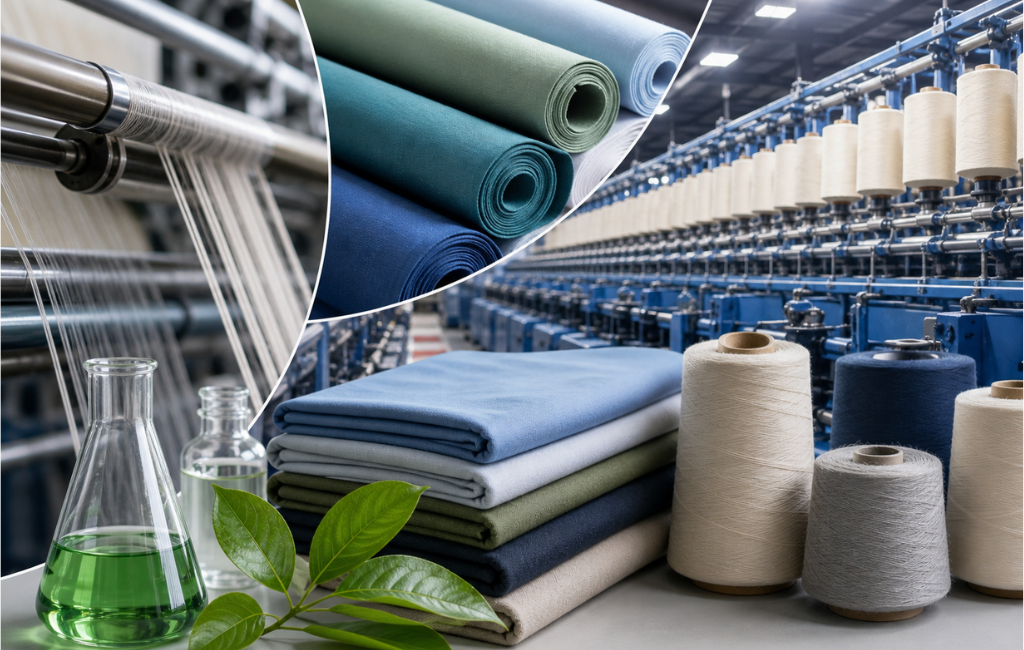
The textile chemical industry in India plays an important role in supporting textile manufacturing, yarn processing, fabric quality, and finishing applications. As Indian textile manufacturers respond to changing customer expectations, export requirements, and sustainability goals, choosing the right textile chemicals has become increasingly important.
From textile sizing chemicals used in weaving to binders and softeners used for specific fabric applications, chemical selection can influence production efficiency, product consistency, and the final quality of textile products.
In 2026, manufacturers are paying closer attention to chemical performance, regulatory compliance, sustainable solutions, and supplier reliability. Understanding these developments can help textile mills make informed decisions and remain competitive.
What Is the Textile Chemical Industry in India?
The textile chemical industry supplies chemicals and auxiliary products used in different textile manufacturing and processing applications. These products support specific production requirements, including yarn preparation, fabric treatment, and finishing.
Textile chemical products can include:
- Textile sizing chemicals: Used to help improve warp yarn performance during weaving.
- Textile binders: Used in applications requiring suitable binding properties.
- Textile softeners: Used to achieve desired fabric softness and handle.
- Textile auxiliary chemicals: Products selected for specific processing and performance requirements.
The appropriate chemical depends on the material, machinery, manufacturing conditions, and desired outcome. Manufacturers should evaluate products based on their intended application rather than assuming one solution suits every process.
Key Trends Shaping the Textile Chemical Industry in India in 2026
1. Growing Interest in Sustainable Textile Chemicals
Sustainability continues to influence decisions across textile supply chains. Manufacturers are increasingly interested in understanding the environmental profile of the chemicals they purchase.
Sustainable textile chemicals should be evaluated using specific product information rather than marketing claims alone.
Before selecting a product, manufacturers can review:
- Product composition and relevant safety information
- Biodegradability data, where applicable
- Environmental and regulatory documentation
- Chemical consumption and application efficiency
- Compatibility with existing production processes
The goal is to balance environmental considerations with the performance and quality requirements of textile manufacturing.
2. Greater Attention to Chemical Compliance
Textile manufacturers serving international markets may need to meet specific chemical requirements imposed by customers, regulations, and certification schemes.
REACH is a European Union regulation concerning the Registration, Evaluation, Authorisation and Restriction of Chemicals. Depending on the product, application, and supply chain, REACH-related requirements may be relevant to textile chemical selection.
Manufacturers should ask suppliers for appropriate Safety Data Sheets (SDS), Technical Data Sheets (TDS), product declarations, and supporting compliance documentation.
REACH compliance should be checked for the specific product and applicable requirements, rather than assumed for an entire supplier’s product range.
3. Focus on Consistent Product Performance
Chemical consistency is important for textile mills that need predictable production results.
Variations in product characteristics or unsuitable application conditions can affect processing performance and increase the risk of rework.
Manufacturers should assess product specifications, batch consistency, recommended usage conditions, and performance under actual production conditions.
Conducting suitable trials before large-scale implementation can help identify potential problems early.
4. Increased Importance of Chemical Compatibility
Choosing a textile chemical involves more than identifying a product with the right general purpose.
Manufacturers should also consider its compatibility with the yarn or fabric, other chemicals, machinery, and operating conditions.
For example, a textile sizing chemical should be evaluated against the mill’s yarn characteristics and weaving requirements. The right selection may help support smoother weaving, while unsuitable choices can contribute to processing difficulties.
Technical discussions and controlled trials can help manufacturers make better-informed decisions.
Opportunities for Textile Chemical Manufacturers and Suppliers in India
India’s textile manufacturing ecosystem creates opportunities for chemical suppliers that understand the practical needs of textile mills.
Supporting Modern Weaving Operations
Weaving mills need sizing solutions suited to their yarn types, machinery, and production targets. Suppliers that provide clear technical information and application guidance can help mills evaluate products more effectively.
Meeting Demand for Fabric Performance
Textile binders and softeners serve different applications and performance requirements. Understanding the end use of a fabric helps manufacturers select products that align with the required characteristics.
Developing Sustainability-Focused Solutions
Suppliers can support more responsible purchasing by providing transparent product documentation and helping customers evaluate relevant environmental characteristics.
Building Long-Term Supplier Relationships
Reliable communication, consistent product quality, and dependable supply arrangements can help suppliers build stronger relationships with textile manufacturers.
For buyers, these qualities can be as important as the initial purchase price.
How to Choose the Right Textile Chemical Suppliers in India
Selecting a suitable supplier is an important decision for textile mills and procurement teams. Comparing suppliers systematically can help reduce purchasing risks.
Consider these factors before placing an order:
- Product suitability: Confirm that the chemical is appropriate for your specific application.
- Quality consistency: Ask about specifications, quality-control procedures, and batch consistency.
- Technical documentation: Request relevant SDS, TDS, product specifications, and compliance information.
- Technical support: Determine whether the supplier can provide product guidance and help address application questions.
- Supply reliability: Discuss order quantities, lead times, packaging, and repeat-order requirements.
- Sustainability information: Request evidence supporting environmental or sustainability claims.
- Overall value: Consider dosage, performance, process efficiency, logistics, and potential rework—not only the price per kilogram.
A structured evaluation helps manufacturers select suppliers based on practical requirements rather than price alone.
The Role of Textile Sizing Chemicals, Binders and Softeners
Different textile chemicals support different manufacturing needs. Understanding their intended uses can help mills identify suitable products.
Textile Sizing Chemicals
Sizing chemicals are used in warp yarn preparation to help improve yarn performance during weaving. Product selection should consider yarn characteristics, loom conditions, and process requirements.
Textile Binders
Textile binders are used in applications where binding performance is required. Their suitability depends on the material, intended use, and required product characteristics.
Textile Softeners
Textile softeners are selected to help achieve the desired fabric handle and softness. Manufacturers should consider fabric type, finishing objectives, compatibility, and application conditions.
Choosing the right product in each category requires attention to technical specifications and the conditions under which it will be used.
Challenges Facing the Textile Chemical Industry in India
Despite opportunities for growth, textile chemical manufacturers, suppliers, and buyers face several practical challenges.
- Cost pressure: Manufacturers must balance chemical costs with performance and production requirements.
- Compliance expectations: Buyers may require product-specific documentation for regulatory or customer requirements.
- Quality consistency: Maintaining predictable results across batches is essential for many manufacturing operations.
- Technical compatibility: Chemicals must be suitable for the materials and processes in which they are used.
- Sustainability evaluation: Environmental claims need to be supported by appropriate evidence.
- Supply-chain reliability: Delays or inconsistent supply can disrupt manufacturing schedules.
Addressing these challenges requires informed product selection, clear supplier communication, and appropriate quality-control practices.
Future Outlook for the Textile Chemical Industry in India
The future of the textile chemical industry in India will depend on how effectively businesses respond to manufacturing needs, customer expectations, regulatory requirements, and sustainability priorities.
Manufacturers are likely to continue evaluating chemical products based on a combination of performance, documentation, process compatibility, supply reliability, and overall value.
For textile chemical suppliers, transparent communication and application-specific product guidance can help build trust with customers.
For textile mills, reviewing existing chemical choices and working closely with suppliers can support better purchasing decisions and more consistent production planning.
Rather than following sustainability trends blindly, businesses should evaluate each product against their actual technical, environmental, and commercial requirements.
How Sri Gomuki Tex Chem Supports Textile Manufacturers
Sri Gomuki Tex Chem Pvt Ltd provides textile chemical solutions for modern textile manufacturing, with a focus on textile sizing chemicals, binders, and softeners.
Textile manufacturers evaluating chemical products should consider their application requirements, desired performance, documentation, and supplier support before making a purchasing decision.
Looking for textile chemical solutions for your manufacturing requirements?
Call Now: +91 9655006383
Frequently Asked Questions
The textile chemical industry in India supplies chemicals used in textile manufacturing and processing applications, including sizing, binding, softening, and other application-specific requirements.
Common product categories include textile sizing chemicals, binders, softeners, and other auxiliary chemicals selected according to the manufacturing process.
Manufacturers should evaluate product suitability, quality consistency, technical documentation, supply reliability, technical support, and overall value.
Sustainable textile chemicals are products evaluated for relevant environmental characteristics, responsible use, and application performance. Specific claims should be supported by appropriate product information and evidence.
REACH-related requirements may be relevant when supplying products into or through applicable European markets. Manufacturers should verify the requirements that apply to their specific product and supply chain.
Manufacturers should consider yarn type, weaving conditions, product specifications, compatibility, recommended application conditions, and performance in suitable trials.