


The textile industry is increasingly focusing on sustainability, product safety and responsible manufacturing. Today, textile manufacturers must consider more than fabric quality and production efficiency. The chemicals used during textile processing also play an important role in meeting customer expectations and relevant industry requirements.
This is why certified textile chemicals are gaining attention among textile mills, fabric processors and garment manufacturers.
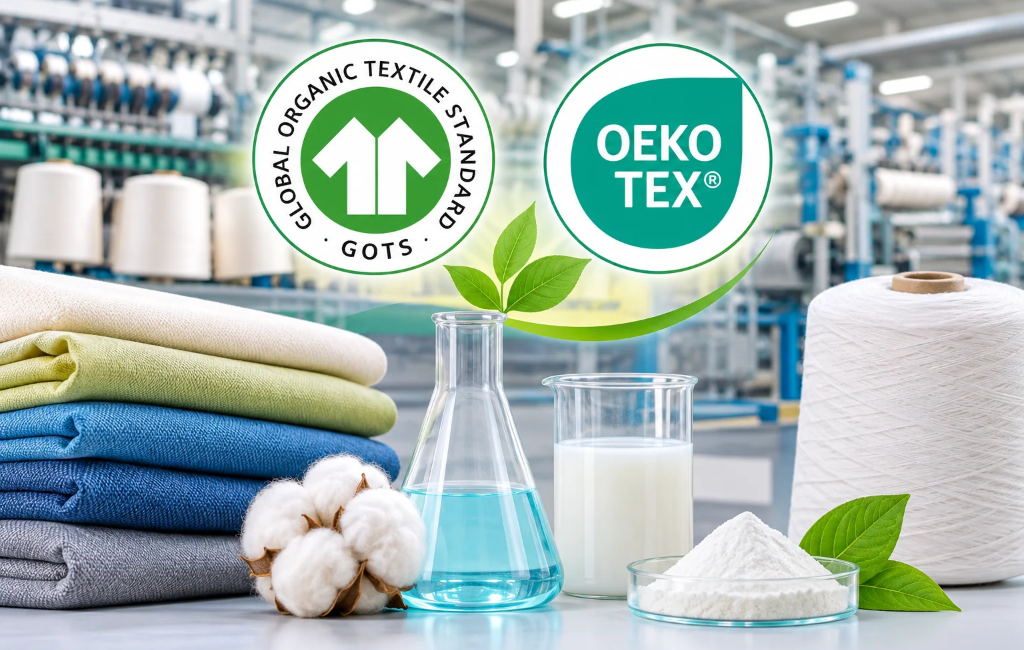
Certifications such as GOTS and OEKO-TEX help businesses evaluate chemical products against specific requirements. Understanding these certifications can help manufacturers make better purchasing decisions and choose suitable textile chemical solutions.
In this article, we explore what manufacturers should know before selecting GOTS and OEKO-TEX certified textile chemicals.
What Are Certified Textile Chemicals?
Certified textile chemicals are chemical products that have been assessed, approved or certified under a particular certification scheme or standard, depending on its scope and requirements.
These products are used in various textile manufacturing processes, including yarn sizing, fabric finishing and other textile applications.
Choosing suitable certified textile chemicals can help manufacturers:
- Evaluate chemical compliance requirements.
- Support responsible textile processing.
- Address customer and buyer expectations.
- Improve transparency in chemical selection.
- Maintain appropriate product documentation.
However, certification requirements differ between schemes. Manufacturers should always check the specific product, certification scope and validity before purchasing.
What Is the Importance of GOTS Certified Textile Chemicals?
The Global Organic Textile Standard (GOTS) is an internationally recognized standard for organic textiles.
It covers relevant environmental and social criteria throughout the textile processing and manufacturing chain, including requirements for chemical inputs.
GOTS certified textile chemicals are relevant to manufacturers involved in GOTS-certified textile production because chemical inputs must meet the applicable requirements of the standard.
Key Things Manufacturers Should Check
Before selecting GOTS-related chemical products, manufacturers should consider:
- Certification Status: Verify whether the chemical product is approved or listed under the applicable GOTS requirements.
- Product Documentation: Request valid product documentation and supporting compliance information.
- Chemical Composition: Understand the product formulation and relevant chemical restrictions.
- Application Suitability: Ensure the chemical is appropriate for the intended textile processing stage.
- Standard Updates: Check the latest applicable GOTS requirements before making purchasing decisions.
It is important to understand that a supplier’s general sustainability claims do not automatically mean every product is GOTS approved.
What Are OEKO-TEX Certified Textile Chemicals?
OEKO-TEX provides different testing, certification and verification services for textiles, leather and chemical products.
One relevant programme for textile chemical manufacturers and suppliers is OEKO-TEX ECO PASSPORT.
It is designed to evaluate chemicals, colourants and auxiliaries used in the textile and leather industries against defined requirements, including screening for harmful substances.
OEKO-TEX certified textile chemicals can help textile manufacturers assess chemical inputs and address relevant requirements from customers and supply-chain partners.
Benefits of Choosing OEKO-TEX-Verified Chemical Products
- Supports chemical transparency.
- Helps assess compliance with defined substance requirements.
- Provides relevant product verification information.
- Supports responsible chemical selection.
- Helps manufacturers respond to buyer expectations.
Manufacturers should verify the specific OEKO-TEX programme, certificate number, product coverage and validity rather than assuming all OEKO-TEX certifications have the same purpose.
GOTS vs OEKO-TEX: What Is the Difference?
Both GOTS and OEKO-TEX are important in the textile industry, but they have different purposes and scopes.
Comparison | GOTS | OEKO-TEX ECO PASSPORT |
Main focus | Organic textile processing and production | Chemical products used in textile and leather manufacturing |
Scope | Textile supply chain and processing requirements | Chemical inputs and their assessment |
Chemical requirements | Controls applicable chemical inputs | Evaluates chemical products against programme requirements |
Relevance | GOTS-certified textile production | Chemical product verification |
Manufacturer benefit | Supports organic textile certification | Supports informed chemical selection |
Manufacturers should remember that these programmes are not interchangeable. Meeting one certification’s requirements does not automatically establish compliance with the other.
Why Should Textile Manufacturers Choose Certified Textile Chemicals?
Selecting the right chemical products is an important part of responsible textile manufacturing.
Here are some reasons why certified textile chemicals deserve consideration.
1. Better Chemical Management
Suitable certified or verified products can help manufacturers evaluate chemical inputs and manage relevant compliance requirements.
2. Support for Sustainable Manufacturing
Selecting chemicals with appropriate environmental and safety documentation can support a company’s sustainability objectives.
3. Improved Buyer Confidence
International buyers increasingly request information about textile processing, chemical management and product compliance.
Having relevant documentation helps manufacturers communicate their chemical selection practices more clearly.
4. Better Supply Chain Transparency
Working with suppliers who provide reliable product information makes it easier to evaluate chemical inputs and maintain records.
How to Choose a Reliable Textile Auxiliary Chemicals Supplier
Choosing a dependable textile auxiliary chemicals supplier is just as important as selecting the right chemical product.
Manufacturers should evaluate suppliers based on the following factors:
1. Product Range
Look for suppliers offering products suitable for your manufacturing requirements, such as textile sizing chemicals, binders and softeners.
2. Certification Documentation
Ask for product-specific certificates, compliance statements and technical documentation. Verify the relevant certification directly through the issuing organisation where possible.
3. Consistent Product Quality
Check product specifications and batch consistency to support reliable manufacturing operations.
4. Technical Support
A knowledgeable supplier should understand your application requirements and help identify suitable products.
5. Sustainability Commitment
Evaluate the supplier’s approach to responsible chemical selection, environmental documentation and sustainable textile manufacturing.
Important Documents to Check Before Purchasing Textile Chemicals
Before finalizing a chemical purchase, textile manufacturers should request and review relevant documents.
- Technical Data Sheet (TDS).
- Safety Data Sheet (SDS).
- Product specification sheet.
- Applicable certification or approval documents.
- Certificate validity and product identification details.
- Recommended application and usage instructions.
These documents help manufacturers understand product properties, handling requirements and suitability for their production processes.
Why Choose Sri Gomuki Tex Chem Pvt. Ltd.?
Sri Gomuki Tex Chem Pvt. Ltd. focuses on sustainable textile chemical solutions for modern textile manufacturing.
The company offers textile chemical products across important application categories, including:
- Textile Sizing Chemicals: Solutions for yarn preparation and weaving requirements.
- Textile Binders: Products used for suitable fabric and pigment applications.
- Textile Softeners: Solutions designed to support the desired fabric feel and finishing characteristics.
With a focus on product quality, sustainability and customer requirements, Sri Gomuki Tex Chem Pvt. Ltd. aims to support textile manufacturers with suitable auxiliary chemical solutions.
The company highlights GOTS and OEKO-TEX-related certification credentials and REACH compliance. Manufacturers are encouraged to request product-specific certificates and documentation to verify the applicable scope and validity.
Frequently Asked Questions (FAQs)
Certified textile chemicals are products assessed or approved under specific certification programmes or standards. Their certification scope depends on the applicable scheme.
These are chemical inputs that meet the applicable GOTS requirements for use in GOTS-certified textile processing.
OEKO-TEX ECO PASSPORT is a certification programme for chemicals, colourants and auxiliaries used in textile and leather manufacturing.
No. They have different objectives and assessment scopes. Manufacturers should understand the requirements of each programme before selecting products.
Manufacturers should request product-specific certificates, check certificate validity and verify the product’s identification and scope with the relevant certification organisation.
Conclusion
Choosing the right certified textile chemicals is an important consideration for manufacturers aiming to meet evolving industry expectations.
Understanding GOTS and OEKO-TEX requirements helps textile businesses evaluate chemical products, improve supply chain transparency and make more informed purchasing decisions.
From textile sizing chemicals to binders and softeners, selecting suitable products with verified documentation can support responsible and efficient textile manufacturing.
Think about sustainability. Choose Gomuki.
Looking for suitable textile auxiliary chemicals for your manufacturing requirements?
Call Now: +91 9655006383