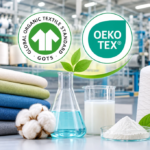




The textile industry plays an important role in India’s manufacturing and export economy. However, growing environmental concerns, changing customer expectations and increasing demand for responsible manufacturing are encouraging textile businesses to adopt more sustainable production practices.
One important step towards this change is choosing the right eco-friendly textile chemicals.
From yarn sizing to fabric finishing, textile chemicals influence product quality, production efficiency and resource consumption. Selecting suitable chemical solutions can help manufacturers improve their processes while supporting their environmental goals.
Today, sustainable textile chemicals are becoming an important consideration for textile mills, fabric manufacturers and processing units looking to balance quality, performance and environmental responsibility.
In this article, we explore the importance of eco-friendly textile chemicals, their applications and how textile manufacturers in India can make more informed chemical choices.
What Are Eco-Friendly Textile Chemicals?
Eco-friendly textile chemicals are chemical products developed or selected to reduce environmental impact while meeting the performance requirements of textile manufacturing processes.
They can support responsible production through features such as improved biodegradability, reduced hazardous substances, better process efficiency and compatibility with relevant environmental standards.
However, the term eco-friendly does not mean that every chemical is completely harmless or environmentally impact-free. Manufacturers should evaluate product-specific technical information, safety data and certification requirements before selecting a chemical.
Common categories of textile chemicals include:
- Textile sizing chemicals
- Textile binders
- Textile softener chemicals
- Wetting and finishing auxiliaries
- Other textile auxiliary chemicals used in manufacturing
Choosing the right products for each application can help textile manufacturers improve production consistency and work towards sustainability objectives.
Why Are Sustainable Textile Chemicals Important for Indian Textile Manufacturing?
India is a major textile manufacturing hub, supplying products to both domestic and international markets. As sustainability expectations continue to develop, manufacturers need to consider not only the quality of their finished fabrics but also the materials and processes used to produce them.
Here are some important reasons why sustainable textile chemicals matter.
1. Supporting Responsible Manufacturing
Selecting appropriate sustainable textile chemicals can help manufacturers reduce the use of certain undesirable substances and improve their overall chemical management practices.
This supports more responsible manufacturing and helps businesses work towards their environmental commitments.
2. Improving Production Efficiency
The right textile auxiliary chemicals can contribute to consistent processing performance.
For example, suitable sizing chemicals can support yarn strength and reduce breakage during weaving when correctly selected and applied.
Better process consistency can help reduce unnecessary reprocessing, material waste and production interruptions.
3. Meeting Changing Market Expectations
International buyers increasingly consider sustainability, chemical safety and product compliance when evaluating textile suppliers.
Manufacturers using suitable, documented chemical solutions may be better positioned to meet buyer requirements and respond to supply-chain expectations.
4. Supporting Better Chemical Management
Responsible chemical selection involves understanding product composition, handling requirements, storage conditions and safety precautions.
Working with suitable chemical suppliers helps textile manufacturers make informed decisions about the products used in their production processes.
What Are the Different Types of Eco-Friendly Textile Chemicals?
Different textile manufacturing stages require different chemical solutions. Selecting products based on their intended application is important for achieving the required performance.
1. Sustainable Textile Sizing Chemicals
Sizing chemicals are used during yarn preparation to improve yarn strength, surface properties and weaving performance.
The right sizing formulation can help:
- Improve yarn strength and abrasion resistance.
- Support smoother weaving operations.
- Reduce yarn breakage during production.
- Maintain consistent fabric quality.
Manufacturers should evaluate sizing products based on yarn type, machine conditions, required performance and compatibility with subsequent processing stages.
2. Eco-Friendly Textile Binders
Textile binders help hold materials together and are used in different textile finishing and coating applications.
Suitable binders can contribute to:
- Better bonding performance.
- Improved fabric surface properties.
- Consistent application results.
- Required durability in the finished material.
The appropriate binder depends on the fabric, application method and desired end-use performance.
3. Textile Softener Chemicals
Textile softener chemicals are widely used in finishing processes to improve fabric handle and surface feel.
Depending on their formulation and application, they can help provide:
- A softer fabric feel.
- Improved surface smoothness.
- Better fabric handling characteristics.
- Desired finishing properties.
When selecting textile softener chemicals, manufacturers should consider fibre compatibility, finishing requirements, durability and the chemical’s environmental profile.
4. Other Textile Auxiliary Chemicals
Textile auxiliary chemicals support various manufacturing and finishing operations.
These products are selected according to specific process requirements and may contribute to better application performance, consistency and production control.
Choosing suitable auxiliaries for each stage is important for achieving the desired textile quality.
How Can Textile Manufacturers Choose the Right Eco-Friendly Textile Chemicals?
Choosing the right chemical is not simply about selecting a product labelled sustainable. Manufacturers should evaluate its technical performance, environmental characteristics and suitability for their production requirements.
Consider these important factors before making a decision.
1. Check Product Composition and Safety Information
Review the Technical Data Sheet (TDS) and Safety Data Sheet (SDS) to understand the product’s characteristics, recommended application and handling precautions.
2. Evaluate Environmental Characteristics
Look for relevant product information regarding biodegradability, restricted substances, chemical composition and environmental performance.
Avoid relying on general marketing claims without supporting documentation.
3. Check Certification and Compliance Requirements
If your products are intended for markets with specific sustainability requirements, check whether the chemical meets the relevant buyer or certification criteria.
Certifications such as GOTS and OEKO-TEX have specific requirements. The suitability of a chemical must be verified against the applicable standard and its current approved criteria.
4. Consider Application Compatibility
A chemical that performs well in one process may not deliver the same results in another.
Evaluate compatibility with the fibre type, machinery, processing conditions and desired fabric properties.
5. Conduct Trials Before Full-Scale Production
Laboratory or production trials can help determine whether a chemical meets the required performance standards.
Testing before large-scale application helps manufacturers make more confident purchasing decisions.
What Should You Look for in a Textile Auxiliary Chemicals Supplier?
Selecting a reliable textile auxiliary chemicals supplier is an important part of maintaining consistent production quality.
A suitable supplier should offer more than just products. Technical knowledge, product documentation and consistent support also matter.
Here are some factors to consider:
- Product range: Availability of suitable sizing chemicals, binders and softeners.
- Technical documentation: Clear TDS and SDS for product evaluation and safe handling.
- Quality consistency: Products that meet defined technical specifications.
- Application knowledge: Understanding of textile manufacturing and processing requirements.
- Sustainability focus: Transparent information about environmental characteristics and applicable certifications.
- Customer support: Assistance with product selection and application-related queries.
Building a dependable supplier relationship can help textile manufacturers maintain product consistency and improve their chemical procurement decisions.
How Do Eco-Friendly Textile Chemicals Support Sustainable Textile Production?
Sustainable textile production involves several interconnected factors, including raw material selection, water and energy management, waste reduction and responsible chemical usage.
Eco-friendly textile chemicals can contribute to this approach in different ways.
Better process efficiency: Appropriate chemical selection can support consistent processing and reduce avoidable production losses.
Responsible chemical use: Understanding product composition and following recommended application guidelines can improve chemical management.
Reduced reprocessing: Suitable formulations and controlled application can help achieve the required results with fewer process corrections.
Improved sustainability planning: Documented chemical characteristics help manufacturers assess whether products align with their environmental and customer requirements.
It is important to remember that overall environmental performance depends on the complete manufacturing process, not just the chemicals used.
Why Choose Sri Gomuki Tex Chem for Textile Chemical Solutions?
Sri Gomuki Tex Chem Pvt. Ltd. focuses on providing textile chemical solutions that support modern textile manufacturing requirements.
With 17+ years of industry experience, the company offers solutions including textile sizing chemicals, binders and softeners for textile manufacturers.
Its focus on sustainable textile chemical solutions supports businesses looking for suitable products that balance manufacturing performance with responsible chemical selection.
What Makes Sri Gomuki Tex Chem a Suitable Business Partner?
- Solutions for different textile manufacturing requirements.
- Focus on textile sizing chemicals, binders and softeners.
- Sustainability-oriented product approach.
- GOTS and OEKO-TEX-related certification credentials.
- REACH compliance positioning.
- Customer-focused support for textile businesses.
Product suitability, certification scope and application requirements should always be confirmed for the specific product before purchase.
Explore the Sri Gomuki Tex Chem official website to learn more about the company and its textile chemical solutions.
Frequently Asked Questions About Eco-Friendly Textile Chemicals
Eco-friendly textile chemicals can support responsible chemical management, improve process efficiency and help manufacturers work towards sustainability goals while meeting specific textile performance requirements.
Not necessarily. Chemical suitability depends on the fibre type, manufacturing process, application method and required fabric properties. Manufacturers should conduct compatibility checks and trials before full-scale use.
Textile softener chemicals are used during fabric finishing to improve softness, smoothness and the overall feel of textile materials.
Look for a supplier offering consistent product quality, technical documentation, application knowledge, transparent sustainability information and reliable customer support.
Depending on the target market and customer requirements, manufacturers may need to consider standards such as GOTS and OEKO-TEX. Always verify the current requirements and whether the particular chemical is eligible for the intended application.
They can help Indian textile manufacturers respond to changing buyer expectations, improve chemical management practices and support more responsible production while maintaining the required fabric quality.