



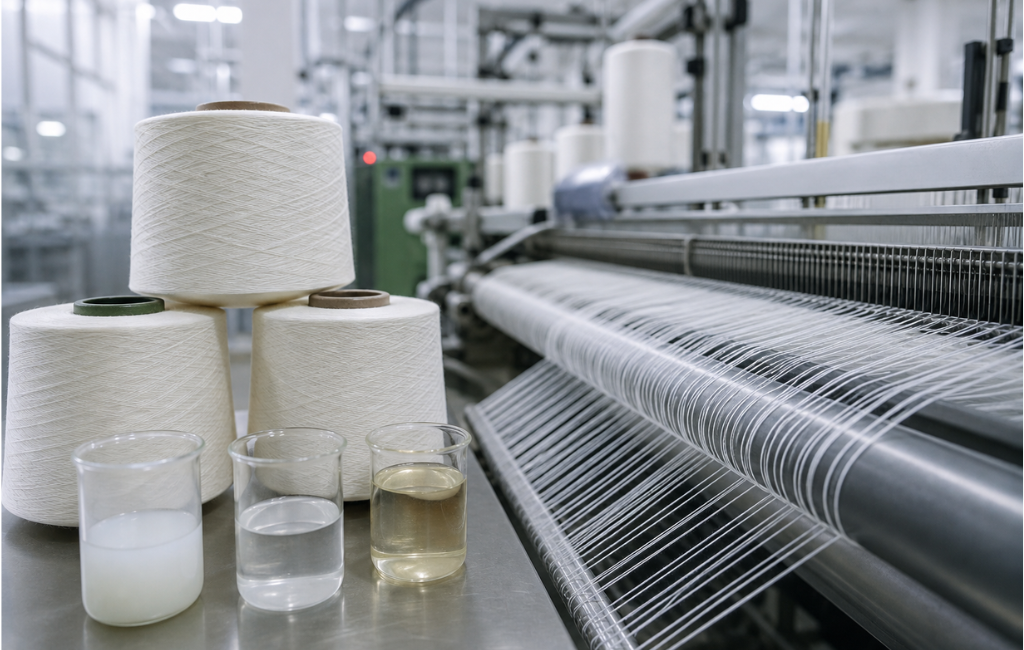
For textile manufacturers and weaving mills, controlling production costs is essential for maintaining profitability. However, reducing costs in the sizing process should never mean compromising yarn strength, weaving efficiency, or fabric quality.
The right sizing chemicals in textile can help mills optimize size consumption, reduce warp breakage, improve loom efficiency, and lower overall production costs. Instead of simply choosing the lowest-priced product, manufacturers should focus on the total cost of the sizing process.
A high-performance sizing formulation can often deliver better results with optimized consumption, improved add-on control, and fewer weaving interruptions.
Understanding the Real Cost of Textile Sizing
Many textile mills focus only on the purchase price of sizing chemicals. However, the actual cost of sizing includes several factors:
- Chemical consumption per kilogram of yarn
- Energy and steam usage
- Water consumption
- Yarn breakage during weaving
- Loom stoppages
- Labour requirements
- Reprocessing and material wastage
- Desizing and wastewater treatment costs
A cheaper chemical may appear economical initially, but excessive consumption or poor film properties can increase the total manufacturing cost.
That is why selecting effective sizing chemicals in textile production should be based on performance and cost efficiency together.
1. Choose Sizing Chemicals Based on Yarn Requirements
Different yarn types require different sizing characteristics. Cotton, polyester, blended yarns, and specialty yarns may need different combinations of adhesion, flexibility, penetration, and film strength.
For manufacturers looking for cotton yarn sizing chemicals in India, it is important to evaluate factors such as:
- Yarn count
- Fibre type
- Weaving speed
- Loom technology
- Required add-on percentage
- Fabric application
Using a generic sizing formulation for every yarn type can lead to overconsumption and inconsistent performance.
Match the Formulation to the Yarn
The correct sizing formulation should provide sufficient protection without excessive add-on. Optimizing the formulation can help reduce chemical usage while maintaining:
- Better abrasion resistance
- Improved yarn strength
- Reduced hairiness
- Lower warp breakage
- Smooth weaving performance
2. Optimize Size Add-On Instead of Over-Applying Chemicals
One of the most effective ways to reduce sizing costs is to control size add-on accurately.
Applying more size does not always mean better yarn protection. Excessive application can increase chemical consumption, energy requirements, and desizing costs.
Textile mills should regularly monitor:
Important Sizing Parameters
- Size concentration
- Viscosity
- Squeeze pressure
- Wet pick-up
- Drying efficiency
- Yarn moisture
- Final add-on percentage
By maintaining consistent process parameters, manufacturers can reduce unnecessary chemical consumption while achieving reliable yarn performance.
3. Improve Adhesion and Film Properties
A good sizing chemical should form a strong and flexible protective layer around the yarn.
Poor-quality sizing can result in brittle films that crack during weaving. This can increase warp breakage and loom stoppages.
High-performance sizing chemicals in textile applications should help achieve a balance between:
- Adhesion to the yarn
- Film strength
- Flexibility
- Abrasion resistance
- Ease of desizing
Improved film properties can reduce yarn damage and improve weaving efficiency without requiring excessive chemical usage.
4. Reduce Warp Breakage to Lower Hidden Production Costs
Warp breakage is one of the major hidden costs in textile manufacturing.
Every yarn break can result in:
- Loom stoppage
- Reduced production efficiency
- Increased labour involvement
- Fabric defects
- Production delays
Investing in effective sizing chemistry can help protect the yarn from mechanical stress during high-speed weaving.
The goal should not simply be to purchase cheaper chemicals. Instead, mills should evaluate whether the product helps reduce the total number of warp breaks and improves loom productivity.
A properly optimized sizing process can provide significant long-term savings.
5. Select Sustainable and Compliant Textile Chemicals
Global textile buyers increasingly expect manufacturers to meet environmental and chemical compliance requirements.
Using REACH compliant textile chemicals can help manufacturers align their processes with applicable chemical management requirements and customer expectations.
Similarly, companies supplying certified textile products may need to evaluate suitable GOTS approved textile chemicals based on the specific certification requirements and approved input criteria.
Choosing compliant products at the beginning of the production process can help reduce the risk of:
- Restricted substance issues
- Export-related compliance problems
- Product rejection
- Costly reformulation
- Supply chain disruptions
However, mills should always verify the current product documentation and certification status for their specific application.
6. Improve Sizing Efficiency Through Process Control
Chemical selection is only one part of cost optimization. Even the best sizing chemicals can perform poorly when process parameters are not properly controlled.
Regular monitoring of the sizing process can help reduce variation and unnecessary consumption.
Focus on These Key Areas
Maintain Consistent Size Viscosity
Changes in viscosity can affect penetration and coating performance. Regular monitoring helps maintain consistency.
Control Drying Conditions
Excessive drying can increase energy costs, while insufficient drying may affect weaving performance.
Monitor Yarn Moisture
Proper moisture control can support smoother processing and consistent yarn properties.
Train Production Teams
Operators should understand how formulation changes and machine settings affect chemical consumption and yarn performance.
7. Work With a Reliable Textile Chemical Supplier
A reliable supplier should provide more than just a chemical product.
Technical support can help textile mills:
- Optimize sizing formulations
- Reduce unnecessary chemical consumption
- Improve process consistency
- Evaluate yarn-specific requirements
- Support compliance requirements
- Improve weaving efficiency
Working with an experienced supplier can help manufacturers identify the right balance between chemical cost and production performance.
For more information about textile chemical solutions, visit Sri Gomuki Tex Chem Pvt Ltd.
How Sri Gomuki Tex Chem Supports Efficient Textile Sizing
Sri Gomuki Tex Chem Pvt Ltd provides textile chemical solutions designed to support modern textile manufacturing requirements.
The right approach to sizing involves understanding both the yarn and the production process. By selecting suitable sizing chemicals in textile manufacturing, mills can work toward:
- Optimized chemical consumption
- Improved yarn protection
- Reduced warp breakage
- Better loom efficiency
- Consistent fabric quality
- Improved cost control
For textile manufacturers searching for cotton yarn sizing chemicals in India, product selection should always consider actual process conditions rather than price alone.
A Practical Checklist for Reducing Sizing Costs
Textile manufacturers can review the following areas regularly:
- Is the sizing formulation suitable for the yarn type?
- Is chemical consumption being monitored?
- Is size add-on optimized?
- Are viscosity levels consistent?
- Are warp breaks being recorded and analyzed?
- Is loom efficiency being monitored?
- Are drying conditions optimized?
- Are chemical compliance requirements being verified?
- Is the supplier providing technical support?
Regular process evaluation can help identify opportunities to reduce costs without negatively affecting yarn performance.
Conclusion
Reducing sizing costs should not mean choosing the cheapest available chemical. The most effective strategy is to reduce the total cost of the sizing and weaving process.
The right sizing chemicals in textile applications can help manufacturers optimize consumption, improve yarn protection, reduce warp breakage, and support efficient weaving operations.
By selecting yarn-specific formulations, controlling size add-on, improving process parameters, and considering compliant solutions such as REACH compliant textile chemicals, manufacturers can build a more efficient and sustainable sizing process.
For businesses evaluating textile chemical solutions and support for their manufacturing requirements, choosing a reliable and experienced supplier can make a significant difference.
Looking for High-Performance Textile Sizing Solutions?
Improve your yarn performance while working toward better sizing efficiency and cost control.
Call Now: +91 9655006383
For product information or technical enquiries, contact Sri Gomuki Tex Chem.