


In the textile industry, maintaining consistent fabric quality is essential for successful manufacturing. From yarn preparation to fabric finishing, every production stage requires the right materials and reliable chemical solutions. Even small variations in chemical quality can affect fabric performance, production efficiency and the final product.
This is why textile chemical quality plays an important role in modern textile manufacturing. Choosing consistent and suitable textile chemicals helps manufacturers achieve uniform results, reduce production challenges and maintain customer satisfaction.
For textile mills and fabric manufacturers, working with reliable textile chemical suppliers is not just about purchasing products. It is about building a dependable supply chain that supports long-term production quality.
1. Why Is Textile Chemical Quality Important in Manufacturing?
Textile chemicals are used in different manufacturing and processing applications to improve yarn properties, fabric performance and finishing characteristics.
When chemical quality varies between batches, manufacturers may experience differences in application, fabric appearance and processing results.
Consistent textile chemical quality helps businesses:
- Maintain uniform fabric quality across production batches.
- Improve consistency in yarn and fabric processing.
- Reduce unnecessary production variations.
- Support better chemical application and process control.
- Minimise material wastage and avoidable rework.
- Maintain customer expectations and product standards.
Selecting suitable chemicals from reliable textile chemical manufacturers in India can help textile mills maintain better control over their production processes.
2. How Does Textile Chemical Quality Affect Fabric Performance?
The quality of textile chemicals directly influences how materials behave during different manufacturing stages. Choosing the right chemical formulation for a particular application can support better processing results.
Better Yarn Strength and Sizing Performance
Sizing chemicals play an important role in preparing yarn for weaving. Suitable sizing solutions help improve yarn strength, reduce hairiness and support smoother weaving operations.
Inconsistent sizing chemical quality may contribute to yarn breakage, uneven application and production interruptions.
Improved Fabric Softness and Feel
Textile softeners are used to improve fabric softness, smoothness and handling characteristics. Consistent chemical performance helps manufacturers achieve the desired fabric feel across production batches.
Better Binding and Fabric Performance
Textile binders are used in applications where binding properties and suitable film formation are important. Selecting the right binder helps manufacturers achieve the required performance based on the fabric and processing conditions.
For this reason, textile mills should evaluate chemical suitability, consistency and application requirements before selecting a product.
3. The Role of Sustainable Textile Chemicals in Modern Manufacturing
Sustainability has become an important consideration for textile manufacturers, particularly businesses supplying international markets.
Customers and sourcing partners increasingly look at the environmental and chemical compliance aspects of textile production.
Using sustainable textile chemicals can support manufacturers in developing more responsible production practices.
Some important considerations include:
- Selecting chemicals with suitable environmental profiles.
- Evaluating biodegradability claims and supporting documentation.
- Understanding chemical safety and handling requirements.
- Checking relevant certification and compliance requirements.
- Working with suppliers who provide clear technical information.
However, sustainability should not be evaluated through marketing claims alone. Manufacturers should review technical data sheets, safety data sheets and relevant supporting documents before selecting a chemical solution.
Choosing suitable sustainable textile chemicals can help textile businesses align their production practices with evolving industry expectations.
4. What Should Textile Mills Check Before Selecting a Chemical Supplier?
Choosing the right supplier is an important decision for textile mills and manufacturers. Product quality, technical support and supply consistency all contribute to a reliable business relationship.
Here are five important factors to consider:
1. Consistent Product Quality
Check whether the supplier maintains consistent product specifications and batch quality. Consistency is important for achieving repeatable manufacturing results.
2. Technical Data Sheets and Documentation
A reliable supplier should provide relevant technical information, including product specifications, recommended applications, handling instructions and storage guidelines.
3. Product Application Knowledge
Different textile applications require different chemical properties. Choose a supplier who understands your manufacturing requirements and can recommend suitable products.
4. Certifications and Compliance
Evaluate the relevant certifications, approvals and compliance documentation based on your product application and target market.
For example, GOTS-related chemical requirements are important for manufacturers working with organic textiles. Buyers should verify the applicable GOTS approval or certification documentation for the specific chemical product.
5. Reliable Supply and Communication
Consistent product availability, timely communication and dependable customer support are important for maintaining uninterrupted manufacturing operations.
Selecting experienced textile chemical manufacturers in India can help textile businesses develop a more reliable sourcing strategy.
5. Understanding GOTS Certified Textile Chemicals and Industry Standards
Certifications and compliance requirements are important considerations when selecting textile chemicals, especially for manufacturers serving export markets.
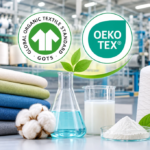
GOTS (Global Organic Textile Standard) establishes environmental and social criteria throughout the organic textile supply chain. Its chemical input requirements are relevant when evaluating chemical formulations for GOTS-certified textile processing.
When sourcing GOTS-approved chemical inputs, manufacturers should:
- Verify the current approval status of the specific chemical product.
- Review the applicable certification or approval documentation.
- Check whether the intended application meets the relevant requirements.
- Maintain appropriate technical and compliance records.
Similarly, OEKO-TEX-related requirements may be relevant when evaluating textile chemical safety and product compliance.
Manufacturers should always verify the applicable standard, certification scope and validity rather than assuming that every product from a certified supplier automatically qualifies.
Understanding these requirements helps textile businesses make informed purchasing decisions and support responsible manufacturing practices.
6. How Consistent Textile Chemical Quality Improves Production Efficiency
Production efficiency is influenced by several factors, including machinery, raw materials, operating conditions and chemical performance.
When textile chemicals deliver consistent results, manufacturers can maintain better process control and reduce avoidable production variations.
Some potential benefits include:
- Reduced production interruptions: Suitable chemical performance can help minimise process-related issues.
- Better batch consistency: Repeatable chemical properties support more uniform processing results.
- Improved resource utilisation: Appropriate chemical selection and application can help reduce unnecessary consumption.
- Less rework: Consistent processing conditions can reduce the risk of quality-related corrections.
- Better customer satisfaction: Uniform fabric quality helps manufacturers meet buyer expectations.
It is important to remember that chemical quality alone does not determine production performance. Correct dosage, machinery settings, water quality and processing conditions also influence the final outcome.
7. Why Choosing the Right Textile Chemical Manufacturer in India Matters
India has a well-established textile manufacturing sector, with businesses serving both domestic and international markets. For textile mills, selecting a dependable chemical partner is an important part of maintaining product quality.
A suitable textile chemical manufacturer should understand the specific needs of textile production and provide products that meet defined application requirements.
Before finalising a supplier, manufacturers should consider:
- Product range and application suitability.
- Consistency of product specifications.
- Technical documentation and product guidance.
- Relevant environmental and compliance information.
- Communication and customer support.
- Long-term supply reliability.
At Sri Gomuki Tex Chem Pvt. Ltd., the focus is on providing textile chemical solutions that support modern textile manufacturing requirements.
With solutions including textile sizing chemicals, binders and softeners, Sri Gomuki aims to support textile businesses with quality-focused and sustainable product offerings.
8. How to Maintain Consistent Textile Chemical Quality in Your Production Process
Selecting a good chemical supplier is only one part of maintaining consistent results. Textile manufacturers should also follow proper quality control practices.
Here are some practical recommendations:
Standardise chemical usage: Follow recommended dosage levels and application instructions based on the product’s technical documentation.
Check incoming materials: Review product specifications, batch details and relevant quality documents before use.
Conduct application trials: Test chemical suitability under actual production conditions before introducing a new product across the entire manufacturing process.
Maintain proper storage: Store chemicals according to the manufacturer’s recommendations to maintain product stability.
Monitor production results: Regularly evaluate yarn strength, fabric appearance, softness and other application-specific quality parameters.
Maintain supplier communication: Discuss any changes in chemical performance or production requirements with your supplier.
These practices help textile mills establish a more consistent approach to chemical management and manufacturing quality.
Conclusion: Consistent Chemical Quality Builds Better Textile Manufacturing
In today’s competitive textile industry, maintaining consistent quality is essential for long-term business success. The right chemical solutions can support better yarn performance, improved fabric characteristics, smoother processing and more responsible manufacturing practices.
For textile mills and manufacturers, investing in reliable textile chemical quality is an important step towards achieving consistent production results and building stronger customer relationships.
Choosing suitable products, verifying technical documentation and partnering with dependable textile chemical manufacturers in India can make a meaningful difference to manufacturing operations.
Think about sustainability. Choose Gomuki.
Call Now: +91 9655006383