


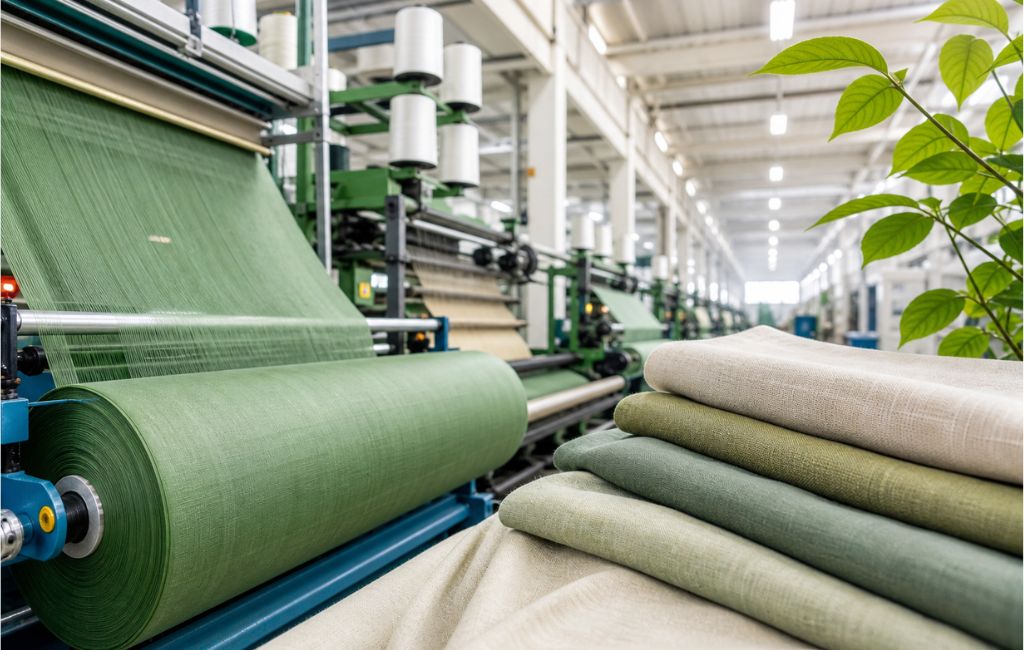
The textile industry is changing quickly. Today, textile manufacturers are expected to deliver fabrics that meet performance requirements while also paying greater attention to resource efficiency, responsible chemical selection, compliance, and environmental impact.
This is why sustainable textile manufacturing in India is becoming an increasingly important focus for textile mills, process houses, exporters, and fabric manufacturers.
Sustainability is not simply about using fewer chemicals. It involves making better decisions across the manufacturing process from selecting suitable textile chemicals to improving production efficiency and meeting customer and market requirements.
For Indian textile manufacturers, 2026 brings several important trends worth watching.
What Is Sustainable Textile Manufacturing?
Sustainable textile manufacturing means producing textiles while considering environmental impact, resource efficiency, product performance, worker safety, and long-term business requirements.
In practical terms, manufacturers may focus on:
- More responsible chemical selection
- Efficient use of water and energy
- Reduction of production waste
- Better fabric performance
- Responsible sourcing
- Improved chemical compliance
- Longer-lasting textile products
- More sustainable production processes
For textile manufacturers, the goal is not simply to make production “green.” The objective is to find a practical balance between performance, quality, efficiency, compliance, and sustainability.
1. Growing Demand for Eco-Friendly Textile Chemicals
One of the most important developments in sustainable textile manufacturing in India is the increasing focus on chemical selection.
Textile mills are looking more closely at the chemicals used during manufacturing and asking important questions:
- Does the chemical support the required fabric performance?
- Is it suitable for the intended application?
- Can it help improve production efficiency?
- Does it meet relevant customer or market requirements?
- Is there appropriate documentation for compliance?
This is driving interest in eco-friendly textile chemicals for applications such as sizing, binding, and softening.
Sustainable Textile Sizing Chemicals
Sizing chemicals play an important role in improving yarn performance during weaving. The right sizing solution can support yarn strength, abrasion resistance, and smoother weaving performance.
For sustainable manufacturing, manufacturers can consider sizing solutions based on their specific yarn, fabric, machinery, and production requirements rather than simply selecting a chemical based on price.
Textile Binders for Better Fabric Performance
Binders are important in applications where adhesion and durability are required. Selecting the right binder and applying it correctly can influence fabric performance.
For manufacturers, the focus is increasingly shifting toward the combination of chemical performance and responsible selection.
Textile Softeners and Fabric Feel
Textile softeners influence the handle and feel of finished fabrics.
A suitable softener should match the fabric type and the desired end-use characteristics. For manufacturers targeting premium markets, fabric feel can be an important part of the final product experience.
2. Compliance Is Becoming More Important
Another major trend in sustainable textile manufacturing in India is greater attention to chemical compliance.
International buyers and brands may have specific requirements regarding restricted substances, chemical safety, and textile certifications.
This makes it important for manufacturers to understand the requirements relevant to their target market and product.
Terms such as GOTS approved textile chemicals, OEKO-TEX requirements, and REACH compliance frequently appear in sustainable textile discussions.
However, manufacturers should always verify the exact certification, approval, scope, and documentation applicable to a particular chemical or product rather than assuming that every sustainability claim means the same thing.
3. GOTS and OEKO-TEX Requirements Are Influencing Chemical Selection
Sustainability-focused textile production increasingly involves third-party standards and certifications.
GOTS approved textile chemicals are relevant to manufacturers producing textiles within the scope of GOTS requirements. Similarly, OEKO-TEX-related requirements can influence chemical selection and testing expectations.
The important point is that certification should not be treated simply as a marketing label.
Manufacturers should ask:
- What standard applies to my product?
- Is the chemical approved or suitable for the intended certified process?
- What documentation is available?
- Are there restrictions for the intended application?
- Does the supplier provide appropriate technical information?
Working with knowledgeable Textile chemical suppliers in India can help manufacturers evaluate these requirements more effectively.
4. Textile Manufacturers Are Looking Beyond Chemical Price
Cost remains important in textile manufacturing, but the cheapest chemical is not always the most economical choice.
A chemical that causes poor performance, higher wastage, production interruptions, reprocessing, or inconsistent fabric quality can create additional costs.
This is why manufacturers are increasingly considering total production value rather than purchase price alone.
For example, the right sizing chemical may help support smoother weaving. A suitable binder may contribute to required print or coating performance. A properly selected softener may help achieve the desired fabric handle.
The right chemical should therefore be evaluated according to its performance, application, compatibility, consistency, documentation, and overall production requirements.
5. Sustainability and Production Efficiency Will Work Together
Sustainability and production efficiency are closely connected.
Reducing unnecessary reprocessing, minimizing production defects, improving chemical application, and maintaining consistent fabric quality can all contribute to more efficient manufacturing.
For Indian textile mills, this means sustainability does not necessarily have to be a separate project.
It can become part of everyday production decisions.
Why Chemical Compatibility Matters
A textile chemical may perform well in one process but produce different results under another set of conditions.
Factors such as:
- Fibre composition
- Yarn characteristics
- Fabric construction
- Chemical dosage
- Application method
- Machine conditions
- Processing temperature
- Finishing requirements
can influence the final result.
Therefore, textile manufacturers should evaluate chemical solutions based on their specific process rather than choosing a product only because it is widely used.
6. Traceability and Technical Documentation Will Matter More
As textile supply chains become more transparent, documentation is becoming increasingly important.
Manufacturers may need information such as technical data, application guidance, safety information, and relevant compliance documentation when working with customers or certification requirements.
This creates an opportunity for professional Textile chemical suppliers in India to provide more than just products.
Technical support, application knowledge, consistency, and documentation can become important parts of the supplier relationship.
7. Indian Textile Manufacturers Are Preparing for Global Sustainability Expectations
India is an important textile manufacturing hub serving both domestic and international markets.
As global buyers increasingly consider sustainability, Indian manufacturers need to understand the expectations of their target markets.
This does not mean every manufacturer needs to follow exactly the same sustainability strategy.
A better approach is to identify the requirements relevant to the company’s:
- Product category
- Target customer
- Export market
- Manufacturing process
- Certification requirements
- Fabric application
This allows sustainability efforts to become more practical and measurable.
How Can Textile Manufacturers Make Their Production More Sustainable?
There is no single solution for every textile mill. However, manufacturers can start with several practical steps.
1. Review Current Chemical Usage
Identify the textile chemicals currently being used for sizing, binding, and softening.
Understand their purpose, dosage, application method, and performance.
2. Evaluate Eco-Friendly Alternatives
Where technically suitable, evaluate eco-friendly textile chemicals that support the required production and performance objectives.
3. Work With the Right Chemical Supplier
Choose suppliers that can provide consistent products, technical information, application support, and relevant compliance documentation.
4. Test Before Large-Scale Adoption
A chemical that looks suitable on paper may behave differently under actual production conditions.
Trials can help manufacturers evaluate compatibility and performance before full-scale implementation.
5. Monitor Results
Track relevant production indicators such as fabric quality, defects, reprocessing, chemical consumption, and production efficiency.
Sustainability becomes more meaningful when improvements can be measured.
Choosing Textile Chemical Suppliers in India
The role of a chemical supplier is becoming more important as manufacturers move toward sustainable production.
When evaluating Textile chemical suppliers in India, manufacturers can consider:
- Product consistency
- Technical support
- Application knowledge
- Relevant certifications and documentation
- Product performance
- Compatibility with the manufacturing process
- Sustainability objectives
- Response time and customer support
A supplier should ideally understand the manufacturing challenge rather than simply recommend a product.
The Future of Sustainable Textile Manufacturing in India
The future of sustainable textile manufacturing in India will likely involve a combination of responsible chemistry, better process control, improved efficiency, compliance awareness, and changing customer expectations.
For textile mills and manufacturers, sustainability is becoming increasingly connected with everyday production decisions.
Sizing chemicals, binders, and softeners may appear to be small parts of a larger textile process, but the right selection and application can contribute to fabric performance and more responsible manufacturing practices.
The key is to approach sustainability practically: understand the process, identify the requirements, select suitable chemical solutions, test them properly, and continuously improve.
Why Choose Sri Gomuki Tex Chem?
Sri Gomuki Tex Chem Pvt Ltd provides textile chemical solutions focused on sizing chemicals, binders, and softeners for textile manufacturers.
With a focus on sustainable textile chemical solutions, the company supports textile mills and manufacturers looking for solutions that balance fabric performance, production requirements, and sustainability objectives.
Gomuki’s product portfolio is aligned with the growing demand for responsible textile manufacturing, including solutions positioned around GOTS, OEKO-TEX, REACH, and eco-friendly textile requirements, subject to the applicable product and certification scope.
For product enquiries and technical discussions:
Call Now: +91 9655006383
Frequently Asked Questions
Sustainable textile manufacturing in India focuses on producing textiles while considering resource efficiency, responsible chemical selection, production waste, product performance, compliance, and environmental impact.
Eco-friendly textile chemicals are chemical solutions selected with consideration for environmental impact, chemical safety, responsible production, and applicable sustainability or compliance requirements. Their suitability depends on the specific textile application.
Textile sizing chemicals help improve yarn performance during weaving by supporting properties such as strength and abrasion resistance. The appropriate sizing solution depends on the yarn, fabric, machinery, and manufacturing process.
GOTS approved textile chemicals are chemical products that meet the applicable requirements of the Global Organic Textile Standard for permitted chemical inputs. Manufacturers should verify the current approval and scope for the specific product and application.
Manufacturers can begin by reviewing chemical usage, evaluating suitable eco-friendly alternatives, improving process efficiency, reducing waste and reprocessing, selecting appropriate suppliers, and monitoring measurable production results.
Chemical selection can influence fabric performance, production efficiency, waste, reprocessing, compliance requirements, and overall manufacturing outcomes. Therefore, chemicals should be evaluated according to the specific production process rather than price alone.