



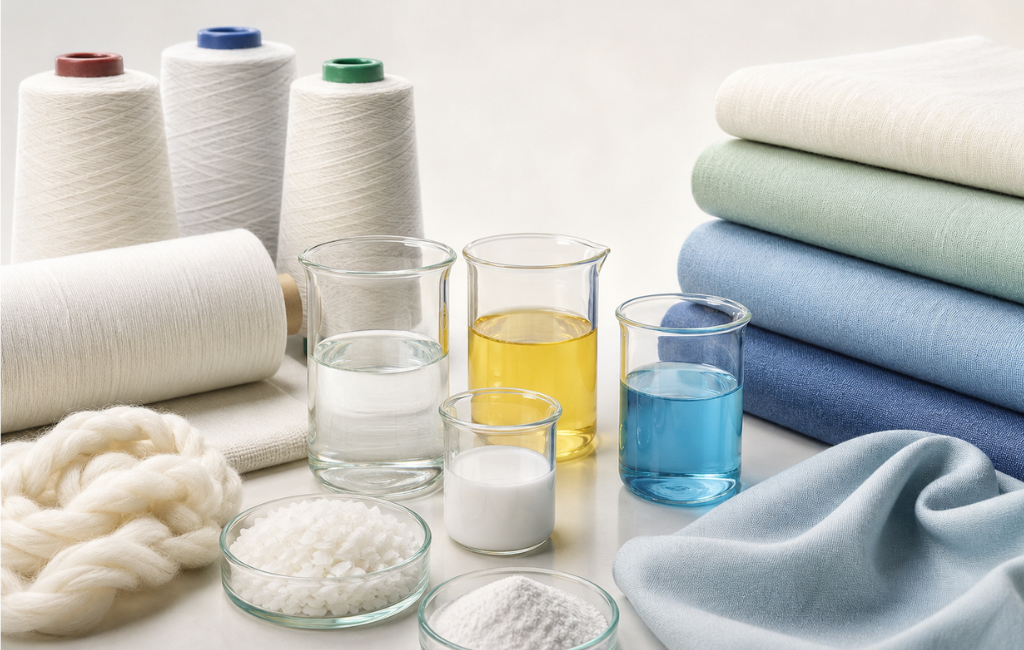
The textile industry relies on specialized chemical solutions to improve yarn performance, fabric quality, appearance, softness, and processing efficiency. From preparing yarn for weaving to improving fabric handle and supporting finishing applications, the right textile chemicals can make an important difference in manufacturing performance.
Among the many chemical solutions used by textile manufacturers, textile sizing chemicals, textile binders, and textile softeners are particularly important for specific manufacturing and finishing requirements.
Choosing the right chemical is not simply about selecting a product. Textile manufacturers need to consider the type of yarn or fabric, production process, required performance, compatibility, sustainability requirements, and end-use expectations.
In this article, we explore the key textile chemical categories relevant to modern textile manufacturing and explain how they are used.
What Are Textile Chemicals?
Textile chemicals are specialized chemical formulations used to support different stages of textile manufacturing and finishing.
They can help manufacturers achieve specific properties such as:
- Improved yarn strength
- Better weaving performance
- Reduced yarn breakage
- Improved fabric handle
- Enhanced softness
- Better surface properties
- Improved adhesion in selected applications
- Desired finishing characteristics
The chemical solution required depends on the manufacturing process and the performance expected from the final textile product.
For textile manufacturers, selecting a compatible and application-specific chemical solution is essential for maintaining consistent production and fabric quality.
Which Chemicals Are Used in the Textile Industry?
For applications related to sizing, fabric finishing, and selected textile applications, three important categories are sizing chemicals, binders, and softeners.
Let us understand each category in detail.
1. Textile Sizing Chemicals
Textile sizing chemicals are used primarily to support yarn preparation before weaving.
During weaving, yarn is exposed to repeated mechanical stress, friction, and tension. Appropriate sizing solutions can help improve yarn performance and make it more suitable for the weaving process.
Why Are Sizing Chemicals Used?
Sizing chemicals can help:
- Improve yarn strength
- Reduce yarn breakage
- Improve abrasion resistance
- Support smoother weaving
- Improve weaving efficiency
- Provide better yarn surface characteristics
For weaving mills, maintaining consistent yarn performance is important because frequent yarn breakage can affect production efficiency and fabric quality.
Who Uses Textile Sizing Chemicals?
Sizing solutions are particularly relevant for:
- Textile mills
- Weaving units
- Yarn manufacturers
- Fabric manufacturers
- Process houses involved in textile production
The appropriate sizing formulation depends on factors such as yarn type, fabric construction, weaving conditions, and processing requirements.
2. Textile Binders
Textile binders are another important category of textile chemical solutions.
Binders can be used in selected textile printing and finishing applications where improved adhesion of pigments or other components to the textile surface is required.
A suitable binder can contribute to the durability and appearance of the finished textile when correctly selected and applied.
What Are Textile Binders Used For?
Depending on the application, textile binders can help with:
- Pigment adhesion
- Improved print durability
- Surface performance
- Fabric appearance
- Wash resistance requirements
- Consistency of textile printing applications
The selection of a binder should consider the fabric type, printing method, curing conditions, required finish, and desired performance.
Using a binder that is compatible with the specific application can help manufacturers achieve more consistent results.
3. Textile Softeners
Textile softeners are widely associated with fabric finishing because they help improve the feel and handle of textile materials.
After different manufacturing and processing stages, fabric may require a particular level of softness, smoothness, or surface feel depending on its end use.
Textile softeners can be selected to help achieve the desired tactile properties.
Why Are Textile Softeners Used?
Textile softeners may help provide:
- Improved softness
- Smoother fabric handle
- Enhanced comfort
- Better surface feel
- Desired finishing characteristics
- Improved overall textile appeal
The right softener depends on the fibre, fabric construction, finishing process, application method, and desired final characteristics.
Textile Sizing Chemicals vs Binders vs Softeners
Although all three belong to the broader category of textile chemical solutions, their purposes are different.
Textile Chemical | Primary Application | Main Purpose |
Sizing Chemicals | Yarn preparation | Support yarn performance during weaving |
Binders | Printing & selected finishing applications | Support adhesion and durability |
Softeners | Fabric finishing | Improve softness and fabric handle |
Understanding these differences helps textile manufacturers select the appropriate chemical solution for each application.
How Do You Choose the Right Textile Chemical?
Choosing a textile chemical should be based on the actual manufacturing requirement rather than simply selecting a commonly used product.
1. Consider the Fibre or Yarn Type
Different fibres and yarns can respond differently to chemical formulations. The chemical should be compatible with the material being processed.
2. Understand the Manufacturing Process
A chemical suitable for weaving preparation may not be suitable for fabric finishing or printing applications.
Identify the exact stage where the chemical will be used before selecting a formulation.
3. Define the Required Performance
Manufacturers should identify the desired outcome.
For example:
- Improved weaving performance
- Better yarn strength
- Improved pigment adhesion
- Enhanced softness
- Better fabric handle
- Specific finishing characteristics
4. Check Chemical Compatibility
Compatibility with the existing process, machinery, other formulations, and fabric is an important consideration.
5. Consider Sustainability Requirements
Modern textile manufacturers are increasingly looking for solutions that support more responsible textile processing.
Factors such as biodegradability, environmental considerations, and relevant textile certifications or compliance requirements may influence chemical selection.
Why Are Eco-Friendly Textile Chemicals Becoming Important?
Sustainability has become an important consideration for textile manufacturers, exporters, brands, and international buyers.
Manufacturers may increasingly look for chemical solutions that align with environmental and product-safety requirements.
Depending on the intended application and product specifications, considerations can include:
- Biodegradable formulations
- Reduced environmental impact
- Sustainable textile processing
- GOTS-related requirements
- OEKO-TEX-related requirements
- REACH compliance
However, certification and compliance requirements should always be verified for the specific product and application rather than assumed for every textile chemical.
Why Is Chemical Selection Important for Textile Manufacturers?
Selecting an appropriate textile chemical can influence both processing performance and final fabric characteristics.
An unsuitable formulation may result in inconsistent performance, application difficulties, undesirable fabric feel, or other production challenges.
A suitable chemical solution should therefore be evaluated based on:
Material → Process → Chemical Compatibility → Application → Desired Result
This systematic approach can help textile manufacturers make better purchasing and production decisions.
Textile Chemical Solutions for Modern Manufacturing
Sri Gomuki Tex Chem Pvt Ltd provides textile chemical solutions focused on sizing chemicals, binders, and softeners for textile manufacturing and processing requirements.
The company focuses on delivering solutions designed around textile performance and sustainability considerations.
With experience in textile chemical solutions, Gomuki supports textile manufacturers looking for suitable chemical products for their specific applications.
Its product focus includes:
- Textile Sizing Chemicals
- Textile Binders
- Textile Softeners
- Eco-friendly Textile Chemical Solutions
- Sustainable Textile Chemical Solutions
For manufacturers evaluating textile chemicals, understanding the application requirement first can make the selection process more effective.
Frequently Asked Questions
Textile manufacturing uses different chemical solutions depending on the process. For applications related to sizing, printing, and finishing, important categories include textile sizing chemicals, textile binders, and textile softeners.
Textile sizing chemicals are used during yarn preparation to support yarn strength, abrasion resistance, and weaving performance.
Textile binders can be used in selected printing and finishing applications to support adhesion and durability, particularly in pigment-based textile applications.
Textile softeners are used during finishing to improve fabric softness, smoothness, handle, and overall tactile properties.
Consider the fibre or yarn type, manufacturing process, application method, required performance, compatibility, sustainability requirements, and relevant compliance considerations.
Yes. Sustainability is increasingly important in textile supply chains. Manufacturers may consider factors such as biodegradability, environmental impact, and applicable certifications or regulatory requirements when selecting chemical solutions.
Textile manufacturers can source specialized chemical solutions from textile chemical manufacturers and suppliers offering products for applications such as sizing, binders, and softening.
Conclusion
Textile chemicals play an important role in achieving the required performance and characteristics throughout textile manufacturing and finishing.
For applications relevant to modern textile production, sizing chemicals, binders, and softeners each serve different purposes. Sizing chemicals support yarn performance during weaving, binders can support adhesion in selected printing applications, and softeners help achieve the desired fabric feel and softness.
For textile manufacturers, the key is to select chemical solutions based on the specific material, process, application, and required result.
Sri Gomuki Tex Chem Pvt Ltd focuses on textile chemical solutions including sizing chemicals, binders, and softeners, with an emphasis on performance, sustainability, and the evolving needs of textile manufacturers.
Think about sustainability. Choose Gomuki.