



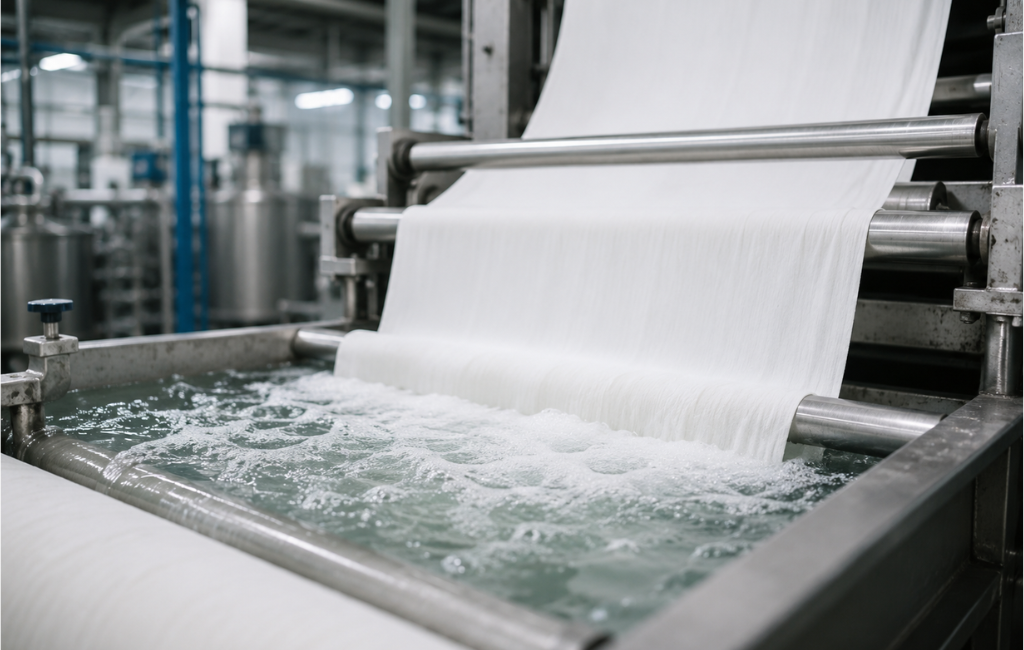
Cotton fabric quality depends heavily on an effective textile desizing process. Removing sizing agents before bleaching, dyeing, or finishing is essential to achieve superior absorbency, uniform dye uptake, and a smooth fabric surface. Among the available methods, enzyme desizing is widely regarded as the best choice for cotton fabrics because it is efficient, eco-friendly, and preserves fabric strength.
In this guide, you’ll learn the different textile desizing methods, their advantages, and how to choose the right process for your textile mill.
What Is the Textile Desizing Process?
The textile desizing process is the pretreatment stage in textile manufacturing where sizing materials applied during weaving are removed from the fabric. These sizing agents, such as starch, modified starch, PVA, or synthetic polymers, protect yarn during weaving but must be eliminated before further processing.
The primary objectives of desizing are:
- Remove sizing chemicals completely
- Improve water absorbency
- Enhance dye penetration
- Prevent uneven dyeing
- Prepare fabric for bleaching and finishing
Without proper desizing, fabrics may experience poor dye absorption, patchy coloration, and reduced product quality.
Why Is Proper Desizing Important for Cotton Fabric?
Cotton fibers naturally absorb moisture, but sizing agents create a barrier that blocks water and dyes.
A well-executed textile desizing process helps:
- Improve dye uniformity
- Increase fabric softness
- Enhance printing quality
- Reduce chemical consumption in later stages
- Improve overall processing efficiency
For textile manufacturers, efficient desizing also minimizes reprocessing costs and enhances customer satisfaction.
Which Textile Desizing Method Is Best for Cotton Fabric?
Several desizing techniques are used in textile processing. The ideal method depends on the type of sizing material used during weaving.
1. Enzyme Desizing (Recommended for Cotton)
Enzyme desizing is considered the preferred method for cotton fabrics sized with starch-based chemicals.
Advantages
- Gentle on cotton fibers
- High desizing efficiency
- Eco-friendly process
- Lower energy consumption
- Excellent fabric strength retention
- Better absorbency after treatment
This method uses amylase enzymes that selectively break down starch without damaging cellulose fibers.
Best for: Cotton woven fabrics using starch-based sizing.
2.Hot Water Desizing
Hot water removes water-soluble sizing agents without additional chemicals.
Advantages
- Simple operation
- Lower chemical usage
- Cost-effective for water-soluble sizes
Limitations
- Not suitable for starch sizing
- Less effective for heavy sizing applications
3.Oxidative Desizing
Oxidizing chemicals break down sizing materials chemically.
Advantages
- Fast removal
- Suitable for difficult sizing formulations
Limitations
- May weaken fabric if not carefully controlled
- Higher chemical consumption
4.Acid Desizing
Acid hydrolysis removes starch sizing under controlled conditions.
Advantages
- Effective starch removal
Limitations
- Risk of cellulose damage
- Requires precise pH control
This method is now less common due to advances in enzyme technology.
Comparison of Textile Desizing Methods
Method | Best For | Fabric Safety | Environmental Impact | Efficiency |
Enzyme Desizing | Cotton | Excellent | High | Excellent |
Hot Water Desizing | Water-soluble sizing | Excellent | Excellent | Moderate |
Oxidative Desizing | Synthetic sizing | Moderate | Moderate | High |
Acid Desizing | Starch sizing | Moderate | Low | Moderate |
For most cotton weaving applications, enzyme desizing provides the best balance of performance, sustainability, and fabric protection.
Step-by-Step Textile Desizing Process
A typical desizing process includes:
Step 1: Fabric Inspection
Check the type of sizing agent used.
Step 2: Chemical Preparation
Select the appropriate desizing chemical or enzyme.
Step 3: Padding or Exhaust Treatment
Apply the desizing solution uniformly.
Step 4: Batch Storage
Allow sufficient reaction time.
Step 5: Washing
Remove dissolved sizing materials.
Step 6: Quality Testing
Evaluate absorbency and residual sizing before bleaching.
Benefits of Choosing the Right Textile Desizing Process
Selecting the correct desizing method offers several production advantages:
- Higher dyeing consistency
- Better printing results
- Improved fabric softness
- Lower production costs
- Reduced processing defects
- Enhanced customer satisfaction
- Increased operational efficiency
An optimized desizing process also complements the use of high-performance Sizing Chemicals for Cotton, ensuring smooth weaving while enabling easy removal during pretreatment.
Expert Tips from Textile Processing Professionals
Based on industry experience:
- Use enzyme desizing for starch-sized cotton fabrics whenever possible.
- Conduct regular laboratory testing to verify desizing effectiveness.
- Combine optimized desizing with high-quality sizing chemicals to improve weaving and finishing performance.
- Review your pretreatment process periodically to identify opportunities for improved efficiency and sustainability.
Conclusion
The textile desizing process plays a vital role in producing high-quality cotton fabrics. While several methods are available, enzyme desizing remains the preferred choice for most cotton applications due to its effectiveness, environmental benefits, and ability to protect fabric integrity.
By selecting the right desizing process and using reliable textile processing chemicals, manufacturers can achieve better dyeing results, improved fabric performance, and greater production efficiency.
Get Expert Support from Sri Gomuki
Looking for high-performance textile chemicals to optimize your weaving and pretreatment processes?
Sri Gomuki Tex Chem offers reliable solutions for textile manufacturers seeking improved efficiency, consistent quality, and sustainable processing.
📧 Email: sales@srigomuki.com | 📞 Phone: +91 9655006383
Frequently Asked Questions (FAQs)
Enzyme desizing is generally the best method for cotton fabrics because it removes starch sizing effectively while preserving fiber strength.
Hot water works well for water-soluble sizing agents but is less effective on starch-based sizes.
Desizing removes barriers that prevent dyes from penetrating the fabric, ensuring even coloration and better dye fixation.
Yes. Proper desizing enhances absorbency, softness, dye uniformity, and overall fabric performance.
Efficient desizing reduces processing defects, minimizes rework, and contributes to smoother downstream operations, ultimately helping textile mills improve productivity and product quality.