


The textile industry relies on specialized chemicals to improve yarn strength, fabric performance, and production efficiency. Two of the most commonly used products are textile binders and sizing chemicals. Although they are often mentioned together, they serve entirely different purposes during textile manufacturing.
If you’re sourcing chemicals for your weaving or finishing unit, understanding the difference can help you improve product quality, reduce production issues, and optimize costs.
In this guide, we’ll explain what textile binders and sizing chemicals are, how they work, where they’re used, and how to choose the right solution for your textile process.
What Is a Textile Binder?
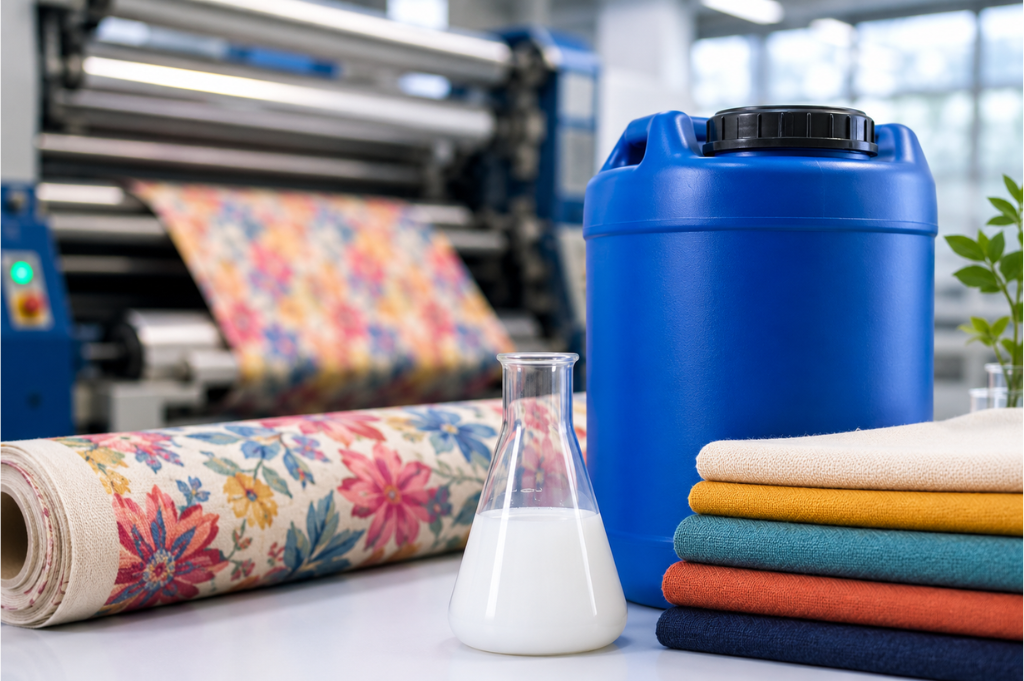
A textile binder is a polymer-based chemical that bonds pigments, fibers, or finishing agents to fabric surfaces. It acts like an adhesive, ensuring that coatings or prints remain durable even after repeated washing and abrasion.
Textile binders are widely used in:
- Textile printing
- Pigment printing
- Fabric coating
- Nonwoven fabrics
- Technical textiles
- Textile finishing applications
Modern acrylic binders also improve flexibility, softness, and wash durability without significantly affecting the fabric’s appearance.
What Is a Sizing Chemical?
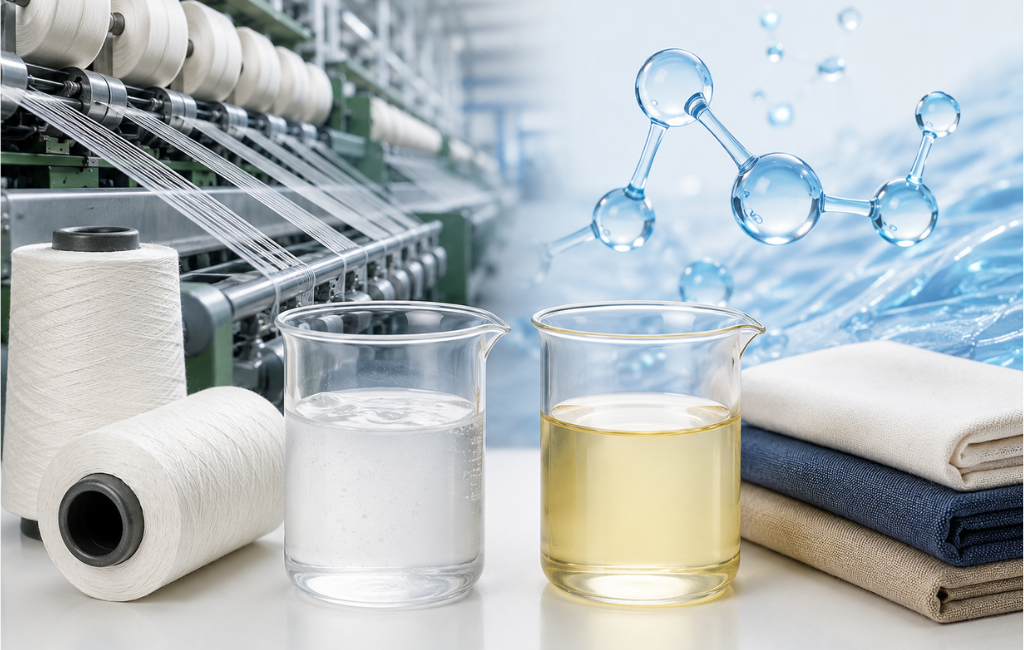
A sizing chemical is applied to warp yarn before weaving to increase yarn strength and reduce breakage during loom operations.
Sizing chemicals create a protective film around yarn, helping it withstand friction, tension, and high-speed weaving.
Typical sizing chemicals include:
- Modified starch
- Synthetic polymers
- Acrylic-based sizing agents
- PVA alternatives
- Eco-friendly sizing formulations
Their primary objective is to improve weaving efficiency not to bond finishes to fabric.
Textile Binder vs Sizing Chemical: What’s the Difference?
Feature | Textile Binder | Sizing Chemical |
Primary Purpose | Bonds pigments and finishes to fabric | Protects yarn during weaving |
Stage of Use | Printing and finishing | Pre-weaving process |
Applied On | Fabric | Warp yarn |
Main Benefit | Wash durability and adhesion | Reduced yarn breakage |
Removed Later? | No | Yes, during the fabric desizing process |
Typical Applications | Pigment printing, coating | Weaving preparation |
Quick Summary:
A textile binder enhances the durability of printed or coated fabrics, while a sizing chemical improves yarn performance during weaving. Both are essential, but they are used at different stages of textile production.
Why Does the Fabric Desizing Process Matter?
After weaving, the protective sizing layer must be removed before bleaching, dyeing, or finishing. This step is called the fabric desizing process.
Proper desizing helps:
- Improve dye penetration
- Ensure even coloration
- Enhance fabric absorbency
- Prevent printing defects
- Produce a smoother fabric finish
If sizing chemicals are not completely removed, they can lead to uneven dyeing, poor print quality, and reduced fabric performance.
When Should You Use a Textile Binder?
Textile binders are ideal for:
Pigment Printing
They securely fix pigments to the fabric, improving color fastness.
Fabric Coating
Binders create durable coatings for water resistance, abrasion resistance, and specialty finishes.
Technical Textiles
Used in automotive textiles, industrial fabrics, and medical textiles to improve bonding and durability.
Nonwoven Manufacturing
Binders strengthen fiber structures without traditional weaving.
When Should You Use a Sizing Chemical?
Sizing chemicals are essential when:
- Producing cotton yarn
- Weaving blended fabrics
- Manufacturing denim
- Operating high-speed looms
- Reducing warp yarn breakage
- Increasing loom efficiency
Proper sizing can significantly reduce machine stoppages and improve weaving productivity.
How to Choose the Right Textile Chemical
Selecting the right chemical depends on your manufacturing stage and production goals.
Choose a textile binder if you need:
- Better adhesion
- Improved print durability
- Enhanced coating performance
- Superior wash resistance
Choose a sizing chemical if you want:
- Stronger warp yarn
- Reduced yarn breakage
- Higher loom efficiency
- Improved weaving productivity
For the best results, consult an experienced textile chemical supplier in India who can recommend formulations based on your fabric type, machinery, and production requirements.
Real-World Example
A weaving mill producing cotton fabric experienced frequent warp yarn breakage, causing production delays.
After switching to a high-performance sizing chemical:
- Yarn breakage was reduced.
- Loom efficiency improved.
- Machine downtime decreased.
- Overall production became more consistent.
Later, during pigment printing, an acrylic textile binder was used to ensure excellent color adhesion and wash durability.
This illustrates how both products work together at different stages of textile manufacturing.
Best Practices for Textile Manufacturers
To maximize production efficiency:
- Select chemicals based on your fabric and process.
- Follow the recommended dosage.
- Maintain consistent application during sizing.
- Ensure complete desizing before dyeing.
- Test binder compatibility with pigments and finishes.
- Partner with reliable chemical manufacturers for consistent quality.
Common Mistakes to Avoid
Avoid these common issues:
- Using binders instead of sizing chemicals for weaving.
- Incomplete fabric desizing before dyeing.
- Over-applying sizing chemicals.
- Choosing low-quality binders that reduce wash fastness.
- Ignoring compatibility between chemicals and machinery.
Preventing these mistakes can improve both fabric quality and production efficiency.
Why Choose Sri Gomuki Tex Chem?
At Sri Gomuki Tex Chem Pvt. Ltd., we manufacture high-performance textile chemicals designed to improve weaving efficiency, fabric quality, and production reliability.
Our product portfolio includes:
- Textile sizing chemicals
- Acrylic textile binders
- Eco-friendly textile chemicals
- Customized formulations for textile mills
- Technical support for process optimization
With years of experience serving textile manufacturers across India, we focus on delivering consistent quality and performance for modern textile production.
Get Expert Textile Chemical Solutions
Looking for the right binder or sizing chemical for your textile mill?
Contact Sri Gomuki Tex Chem Pvt. Ltd. to discuss your production requirements and receive expert recommendations tailored to your manufacturing process.
📧 Email: sales@srigomuki.com | 📞 Phone: +91 9655006383
Request a Quote to discover the ideal textile chemical solution for your business.
Need technical guidance? Our team can help you select the right products to improve efficiency, reduce downtime, and enhance fabric quality.
Frequently Asked Questions
A textile binder bonds pigments or finishes to fabric, while a sizing chemical protects warp yarn during weaving.
Yes. Sizing chemicals are typically removed during the fabric desizing process before dyeing or finishing.
No. These products are formulated for different manufacturing stages and perform different functions.
Textile binders are commonly used in pigment printing, textile coating, technical textiles, nonwoven fabrics, and finishing applications.
Look for a supplier with proven manufacturing expertise, consistent product quality, technical support, and solutions tailored to your production requirements.