

Textile sizing plays a crucial role in improving yarn strength, reducing breakage, and enhancing weaving performance. Among the various sizing ingredients used in the textile industry, binders are essential for ensuring proper adhesion and film formation on yarn surfaces.
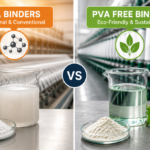
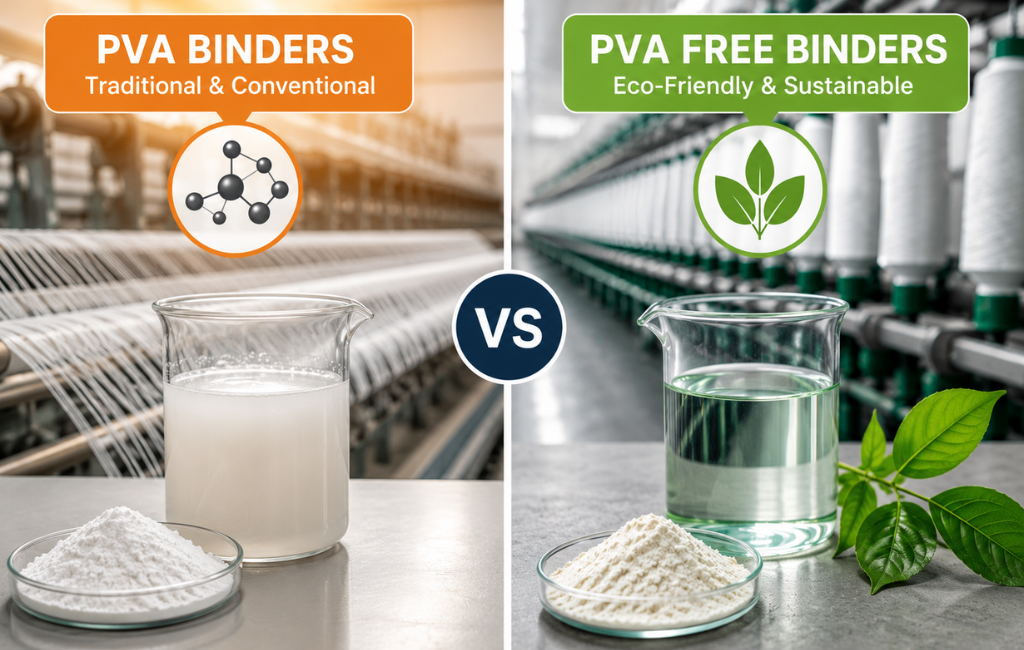
Today, textile manufacturers are increasingly comparing traditional PVA binders with modern PVA free binders to determine which option delivers better performance, lower costs, and improved environmental compliance.
In this guide, we explain the difference between PVA and PVA free binders, their advantages, limitations, and which solution is best suited for modern textile mills.
What Are PVA Binders in Textile Sizing?
PVA (Polyvinyl Alcohol) binders are synthetic polymers widely used in textile sizing formulations. They provide excellent film-forming properties and help strengthen warp yarns during weaving.
Key Benefits of PVA Binders
- Strong adhesion to fibers
- Good film flexibility
- Improved abrasion resistance
- Suitable for high-speed weaving applications
- Consistent yarn protection
For many years, PVA binders have been considered a standard component in textile sizing recipes because of their reliable performance.
However, environmental concerns and rising treatment costs have encouraged mills to explore alternatives.
What Are PVA Free Binders?
PVA free binders are advanced textile sizing binders designed to deliver similar or better performance without using Polyvinyl Alcohol.
These binders are often developed using environmentally friendly polymers that support sustainable manufacturing practices while maintaining sizing efficiency.
Many modern textile mills are adopting PVA free sizing chemicals for textile mills to reduce wastewater treatment challenges and improve sustainability goals.
Advantages of PVA Free Binders
- Lower environmental impact
- Easier desizing process
- Reduced effluent load
- Better biodegradability
- Cost-effective wastewater treatment
- Compliance with sustainability requirements
Difference Between PVA and PVA Free Binders
Understanding the difference between PVA and PVA free binders helps textile manufacturers make informed decisions.
Parameter | PVA Binders | PVA Free Binders |
Composition | Polyvinyl Alcohol based | Alternative polymer systems |
Environmental Impact | Higher COD/BOD load | Lower COD/BOD load |
Biodegradability | Limited | Better biodegradability |
Wastewater Treatment | More challenging | Easier treatment |
Sustainability | Moderate | High |
Desizing Performance | Good | Excellent |
Regulatory Compliance | Increasingly restricted in some regions | More sustainable option |
Long-Term Cost | Higher treatment costs | Lower operational costs |
How PVA Free Binders Improve Weaving Efficiency
One major reason textile manufacturers are switching to PVA free systems is weaving efficiency improvement.
When sizing formulations are optimized using advanced PVA free binders, mills can achieve:
Reduced Warp Breakage
Better film formation helps minimize yarn breakage during weaving operations.
Enhanced Loom Productivity
Fewer yarn interruptions result in smoother loom performance and increased production output.
Better Yarn Flexibility
Modern PVA free binders provide sufficient flexibility while maintaining yarn strength.
Lower Machine Downtime
Reduced breakage means fewer stoppages and higher operational efficiency.
These benefits contribute directly to overall weaving efficiency improvement and profitability.
Why Textile Mills Are Choosing PVA Free Sizing Chemicals
The textile industry is under increasing pressure to reduce environmental impact and improve resource efficiency.
As a result, PVA free sizing chemicals for textile mills are becoming a preferred choice because they:
- Support sustainable textile production
- Reduce wastewater treatment costs
- Improve environmental compliance
- Enhance process efficiency
- Deliver excellent weaving performance
Many export-oriented textile manufacturers are adopting PVA free solutions to align with global sustainability standards.
Role of Biodegradable Textile Binders in Coimbatore
Coimbatore is one of India’s leading textile manufacturing hubs. Textile companies in the region are actively seeking biodegradable textile binders in Coimbatore to improve environmental performance and meet customer expectations.
Biodegradable binder technologies help:
- Reduce environmental footprint
- Improve effluent treatment efficiency
- Support sustainable textile manufacturing
- Enhance brand reputation
- Meet international compliance requirements
As sustainability becomes a key purchasing factor, biodegradable textile binders are expected to play an increasingly important role in the future of textile sizing.
Which Binder Is Better for Textile Sizing?
The answer depends on your production goals.
Choose PVA Binders If:
- You rely on traditional sizing formulations.
- Environmental regulations are less restrictive.
- Existing processes are optimized for PVA systems.
Choose PVA Free Binders If:
- Sustainability is a priority.
- You want lower wastewater treatment costs.
- You seek improved environmental compliance.
- You are looking for long-term operational savings.
- You want advanced sizing solutions for modern textile manufacturing.
For many textile mills, PVA free binders offer the ideal balance of performance, sustainability, and cost efficiency.
Future Trends in Textile Sizing Technology
The textile industry is moving toward greener and more sustainable manufacturing practices.
Emerging trends include:
- Bio-based sizing chemicals
- Sustainable binder technologies
- Low-COD sizing formulations
- Eco-friendly desizing solutions
- Advanced biodegradable textile binders
As these innovations continue to evolve, PVA free binder technology is expected to become increasingly dominant across the textile sector.
Conclusion
Understanding the difference between PVA and PVA free binders is essential for textile manufacturers seeking higher productivity, lower environmental impact, and improved operational efficiency.
While traditional PVA binders continue to provide reliable performance, modern PVA free sizing chemicals for textile mills offer significant advantages in sustainability, wastewater management, and long-term cost savings.
For companies focused on weaving efficiency improvement and adopting biodegradable textile binders in Coimbatore, PVA free binders represent a forward-looking solution that aligns with the future of textile manufacturing.
Looking for High-Performance Textile Sizing Solutions?
At Gomuki, we provide advanced textile sizing chemicals designed to improve weaving performance, reduce yarn breakage, and support sustainable manufacturing.
Contact Us Today
📞 Call Now: 9655006383 | Contact Page: Sri Gomuki
Explore our innovative textile sizing solutions and discover how the right binder technology can improve your production efficiency and fabric quality.